
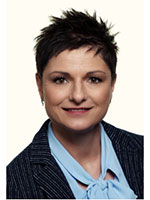
 Sandra Nestler-Parr, PhD, MPhil, MSc is Senior Vice President, Value and Patient Access at BioCryst Pharmaceuticals, where she leads the integrated market access, HEOR, and patient engagement function. In this role, she is responsible for developing and executing evidence-driven strategies that support patient-centered development and secure sustainable patient access to effective innovative therapies for rare diseases worldwide.
Sandra’s career spans more than 25 years across academia, the biopharmaceutical industry, consultancy, and the non-profit sector. She acquired a rigorous scientific approach in academic medical research before transitioning to industry, where she has held a series of senior international positions with growing responsibility. Working predominantly in innovative, entrepreneurial settings, Sandra developed expertise across outcomes research, value demonstration, real-world evidence generation, HTA strategy, market access, health policy, and effective patient engagement.
Early in her career, Sandra developed a special interest for rare diseases and a passion for addressing areas of high unmet need where healthcare innovation can be truly transformative to patients’ lives, but in which systematic, rigorous evidence generation can be challenging.
A strong advocate for elevating the voice of patients and underrepresented stakeholders in healthcare decision-making, Sandra has championed a patient-centric and multi-stakeholder approach throughout her career. She has been serving for 12 years on the Board of Trustees of Alpha-1 UK, a rare-disease patient advocacy organization, has served as a pro-bono external advisor for EURORDIS in a range of major multi-stakeholder projects, and has contributed to European and UK research and policy initiatives in healthcare strategy and delivery through advisory and steering committee roles: these include the UK National Institute of Health Research CONCORD Study Steering Committee, and the Healthcare Regulation and Reimbursement Working Group of University of London’s Future Targeted Healthcare Manufacturing Hub.
Sandra has been an active and highly engaged member of ISPOR for 15 years and has contributed to the Society in a wide range of scientific, leadership, and service roles. She currently serves as Program Committee Co-Chair for ISPOR Europe 2026 and on the Value & Outcomes Spotlight Editorial Advisory Board, including as section editor for the HTA Update column. Earlier in her ISPOR journey, she co-chaired the Rare Disease Special Interest Group, served on the ISPOR Task Force for Clinical Outcome Assessment in Rare Disease Clinical Trials, and was a frequent participant of the ISPOR Patient Representative Roundtable.
Sandra is an advocate for solving complex challenges through collaborative, creative teamwork and by uniting diverse stakeholders around a shared vision. At the heart of Sandra’s work is a passion for building — building effective strategies, high-performing organizations, and environments in which innovative, applied young professionals can thrive. She takes great pride in mentoring and developing the next generation of leaders in HEOR.
Sandra holds a PhD in Toxicology from the University of London, an MPhil in Biochemistry from the University of Cambridge, and an MSc in Health Economics, Policy and Management from the London School of Economics and Political Science.
Vision Statement
As health systems around the world face growing pressure to deliver access, value, and long-term sustainability, the need for rigorous, relevant, and trusted evidence has never been greater. As ISPOR enters its fourth decade, the Society - through the strength, diversity, and engagement of its members - is uniquely positioned to shape the future of HEOR and lead the global conversation on how evidence supports better decisions and health outcomes.
ISPOR’s Strategic Plan 2030 challenges us not only to advance methodological rigor, but also to ensure that evidence is translated into insights that decision-makers trust, understand, and use. My vision for ISPOR is to accelerate the transition from evidence generation to real-world impact by deepening member and stakeholder engagement, expanding the Society’s reach, and strengthening its role as a trusted convener, translator, and leader across the healthcare ecosystem.
As a director of the ISPOR board, I would focus on strengthening execution of the ISPOR Strategic Plan 2030 in three key areas:
More clearly demonstrating and communicating the relevance and impact of HEOR beyond the academy. This requires moving beyond publication alone toward proactive, audience-specific communication of the applicability and value of HEOR. ISPOR can lead by empowering members with tools, platforms, and shared learning that support translation of evidence into decision-oriented insights. By helping clinicians, patient leaders, policy-makers, payers, and investors answer the fundamental question, “What does this evidence mean, and how should it inform action?”, ISPOR can strengthen its influence in real-world decision-making and help ensure sustained investment in the field.
Expanding, deepening, and diversifying ISPOR’s global reach and leadership. Advancing HEOR worldwide requires elevation of underrepresented perspectives in the ISPOR ecosystem and more fully integrating stakeholders who play a critical role in evidence uptake. Lowering barriers to participation for clinicians, regulators, payers, or policy-makers, expanding audience-specific education, and fostering long-term, cross-stakeholder partnerships will enhance member value while amplifying ISPOR’s global relevance. In Latin America and Asia-Pacific — regions where HEOR can have a transformative impact on access, equity, and system sustainability — growth should be region-led, with ISPOR supporting local leadership, facilitating regional collaboration, and co-designing context-sensitive training and resources that reflect local priorities and realities.
Leading, rather than reacting to, the AI and digital future of HEOR. Advances in AI, digital health, and real-world data are reshaping how evidence is generated and applied. ISPOR has an opportunity to set global standards for ethical, transparent, and responsible use of AI and digital innovations in HEOR and HTA, while equipping members with the skills, confidence, and shared learning needed to adopt these tools effectively. Leadership in this space will help ensure that these innovations strengthen rigor, trust, and decision quality worldwide.
With over 25 years of cross-sector experience in academia, biopharma, consultancy, and patient advocacy, a track record of building multi-stakeholder partnerships, and as an enthusiastic ambassador for HEOR, I am committed to helping ISPOR strengthen its voice, empower its members, expand its reach, and further establish the Society as the trusted and influential global voice of our field.