Moving Patient Centricity Beyond Tokenism: Just Checking the Box Misses the Point
What patients want from healthcare interventions—and, importantly, what they don’t want—have become indispensable factors in assessing the value of those measures. HEOR experts are supporting the thoughtful incorporation of patients’ voices across the healthcare landscape as part of a movement toward inclusion of patients as research partners.
By Beth Fand Incollingo
Several decades ago, insights from patients about the level of symptom relief that would have a meaningful impact on their quality of life, or whether the clinical benefits of specific medical interventions outweighed the side effects, were considered “nice to have” by healthcare stakeholders. Now, that type of patient feedback—and tools for quantifying it—has become expected, if not essential, across drug development and the healthcare system.
“If a patient can’t tolerate the drug, are they going to stay on it, or are they going to skip doses? When you’re not considering a drug’s impact on patients in their day-to-day lives, you greatly limit the ability to produce therapies that are effective from the patient’s perspective,” said Stacie Hudgens, Chief Scientific and Strategy Officer at Clinical Outcomes Solutions, which conducts research and incorporates patient insights across drug development.
The movement toward patient-centric healthcare dates back to the activism that brought patient advocates in contact with regulators during the AIDS crisis of the 1980s and 1990s, but it truly took root in the 2010s. That was when the United States Food and Drug Administration (FDA) launched the Patient-Focused Drug Development Initiative (PFDD)1 and the 21st Century Cures Act, both of which required regulators to incorporate patient insights when issuing guidance or making decisions about drug development. As regulatory bodies across the world passed similar initiatives, the World Health Organization adopted a Framework on Integrated, People-Centered Health Services that encouraged national health systems to not just treat patients, but partner with them.2
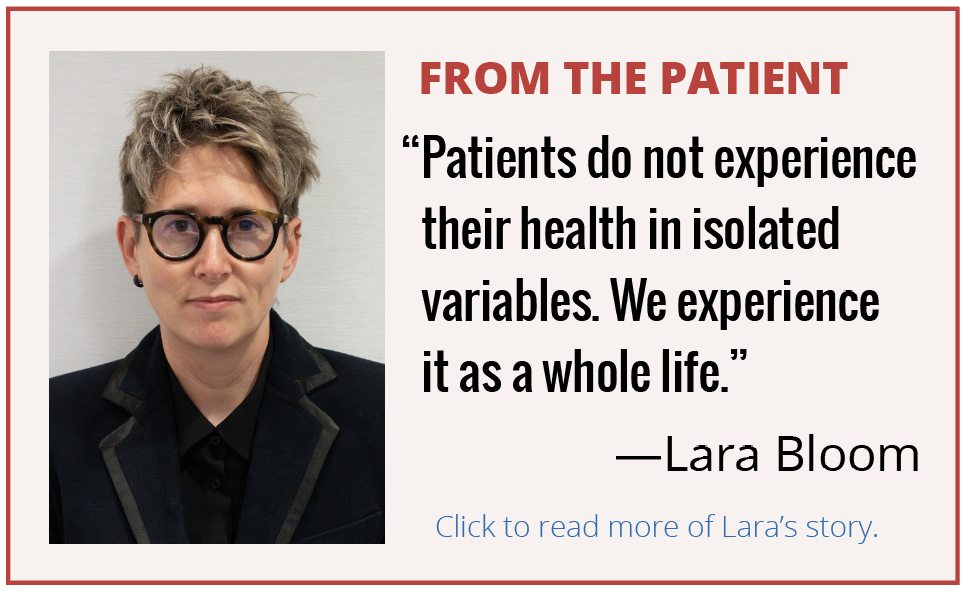 Most recently, regulatory bodies in the United States, the United Kingdom, Canada, the Asia-Pacific region, and beyond have created and refined guidances for patient engagement,3 Hudgens said.
As a result, she said, today’s healthcare stakeholders—from drug developers and payers to health technology assessment (HTA) bodies and healthcare systems—would be hard-pressed to make a major decision without considering patient input.
The health economics and outcomes research (HEOR) community is uniquely positioned to amplify the impact of patient engagement by developing scientifically sound ways to gather insights, translating those findings into evidence about value, integrating the data into supporting materials, and ensuring that the information makes it to the desks of decision makers. At the same time, HEOR professionals are sharing best practices aimed at shaping and encouraging this kind of research.
“Across diseases and measurement approaches,” Hudgens said, “the concept is the same: In addition to data on efficacy, safety, and tolerability, we need really good measurement validity evidence reflecting the patient voice. To me, that voice is the patient in their universe—school, work, home, family, friends. Our job is to capture that experience as perfectly as we can, interpret it, and put it forward on their behalf in clinical research.”
With Patient Engagement, Health Interventions Gain Value
In recognizing patient centricity among its Top 10 HEOR Trends for 2026-2027, ISPOR noted that the approach is shaping the healthcare market.
ISPOR defines patient centricity as “the active, meaningful, and collaborative interaction between patients and researchers across all stages of the research process, where research decision making is guided by patients’ contributions as partners, recognizing their specific experiences, values, and expertise.”4
Patient centricity adds to an intervention’s value for every stakeholder across healthcare, including patients, pharmaceutical companies, physicians, health systems, regulators, and payers, Hudgens said.
Many organizations have recognized that by redefining value in healthcare to include the benefits of patient engagement—among them ISPOR, through frameworks including its Value Flower,5 and the Institute for Clinical and Economic Review (ICER), which emphasizes patients’ top concerns in its decisions about the cost-effectiveness of treatments in the United States.
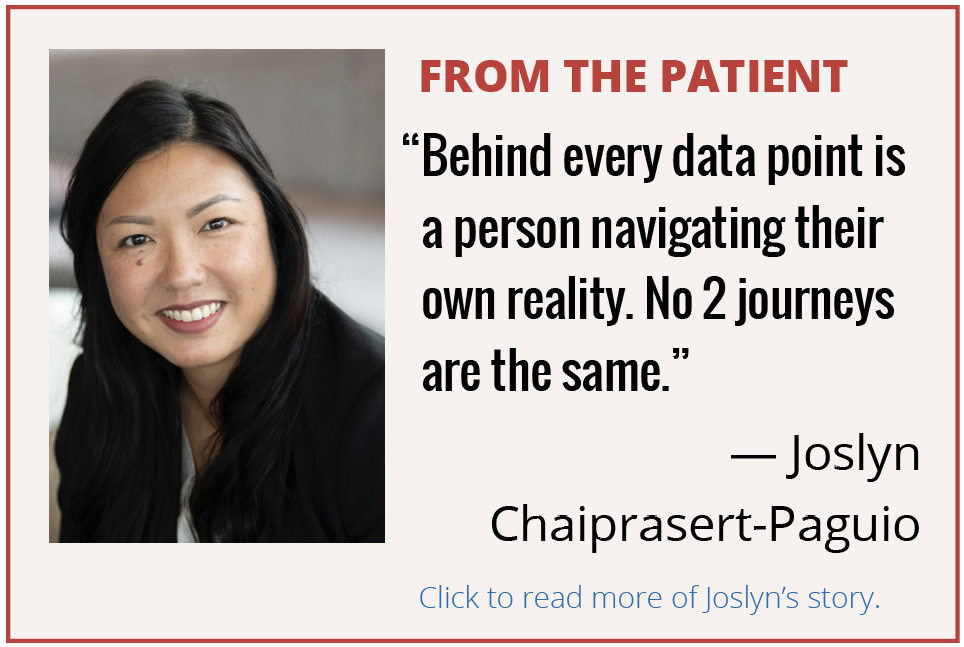 An early example of patient insights supporting value was Viagra (sildenafil), a modestly effective cardiovascular drug that became a blockbuster treatment for erectile dysfunction after Pfizer listened to patients when they said they didn’t want to stop the medication.6
On the other hand, Pfizer’s experience with Exubera exemplified what can go wrong when patients’ needs aren’t fully understood. Pfizer withdrew the inhaled insulin treatment for diabetes after a year on the market, at a $2.8 billion loss, because patients found its dosing complicated, its delivery system unwieldy, and its pulmonary side effects concerning.7
Another drug, Lotronex (alosetron), was pulled from the market by GlaxoSmithKline in 2000, only to return 2 years later, after patients with treatment-resistant severe, diarrhea-predominant irritable bowel syndrome said it was the only therapy that had worked for their debilitating condition.8 While HEOR efforts don’t always come with that much fanfare, the field’s successes can change healthcare strategy in ways that boost patient engagement.9
Hudgens is proud to have gathered patient insights in support of a New Drug Application for the prostate cancer treatment Erleada (apalutamide), because the FDA’s review of the drug was the first ever made entirely available online.10
Transparency is also at the heart of Project Patient Voice, sponsored by the FDA’s Oncology Center of Excellence, which publicly shares patient-reported outcomes from cancer clinical trials to facilitate decision making not only for drug developers, but for patients.
“I call that a win for healthcare and a win for HEOR,” Hudgens said.
Making Patient Engagement Meaningful
To be meaningful, patient engagement must amount to more than an ethical goal or a token gesture, and progress in that area is still uneven, said Dalma Hosszú, Head of Patient Centricity and Engagement at the Syreon Research Institute in Budapest, Hungary, which supports healthcare decision making, and a Board Member focused on patient centricity for the Hungarian Health Economics Association.
“The mindset is shifting, but there are still structural barriers, such as lack of clear methodologies, limited capacity, or uncertainty about how to use patient input in a consistent and decision-relevant way,” Hosszú said.
Stakeholders should notify patients early about opportunities, arrange ongoing commitments with them, and determine which situations call for early insights versus more rigorous studies, said Elisabeth Oehrlein, PhD, MS, founder and CEO of AppliedPX, a patient engagement research firm that focuses on collecting patient experience data and helping stakeholders use it to guide decisions across the product lifecycle.
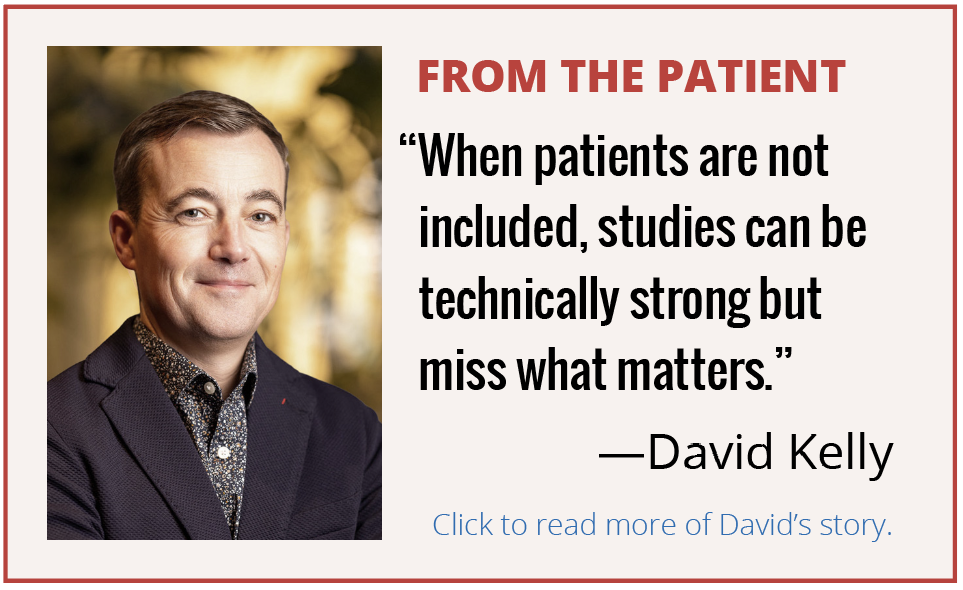 Working with people who have direct lived experience can be especially helpful when you want to understand what it actually feels like to go through something, day-to-day realities, specific pain points, and the decisions people make, since they can speak to what has or hasn’t worked for them in their own lives. Advocates, meanwhile, can offer a broader view by drawing on many voices, helping to identify patterns, common unmet needs, and system-level gaps, which can be useful when shaping strategy, setting priorities, or understanding the wider landscape. A great example is REMEDi4All, the European platform for drug repurposing, which “places the patient’s voice and lived experience at the center of each project and promotes a model where patients are involved throughout the process,” Hosszú said.
Guidance for accomplishing that goal, she noted, was offered in a recent study that identified 12 recommendations for “meaningful, systematic, and sustainable patient involvement” in HTA in Central and Eastern European countries.11
All those methods will gain value if stakeholders include insights from patients across socioeconomic backgrounds, said Alan Balch, PhD, CEO of the Patient Advocate Foundation (PAF), which provides direct assistance to US patients, and its global policy and advocacy arm, the National Patient Advocate Foundation. That’s because low- and middle-income individuals, while often overlooked in research, have important information to contribute about the barriers they face related to managing their health, Balch said.
Those issues may include problems affording treatment, an inability to take time off from work, inadequate childcare or transportation, or even a lack of reliable refrigeration for drugs that must be kept cool, he said.
To establish true, comprehensive patient centricity, Oehrlein said, “those of us in HEOR need to upskill in terms of understanding what constitutes meaningful engagement, and then what opportunities exist to use patient input across processes. A lot of this already exists, but we need to bring it to new stakeholders.”
A Guide to Patient Engagement
Among the tools designed to support HEOR professionals in that endeavor are patient experience data dossiers.12 AppliedPX and partners propose that these would give advocacy groups a template for collating data collected from patients and sharing the information with decision makers across a host of disease states.
“It would reduce the burden on patient groups and would be easier for decision makers to learn about patient experiences and integrate them into the decisions they need to make,” Oehrlein said.
Another tool, standardized by Health Technology Assessment International, is already in use in Scotland, the United Kingdom, Australia, and Taiwan: plain-language summaries of evidence, culled from value dossiers.13
“These prime patients to participate and provide meaningful input,” Oehrlein said.
In a previous role with the National Health Council, Oehrlein helped design a Patient Experience Mapping Toolbox—now being applied across numerous disease states—that can be adapted for different uses so that HEOR professionals don’t have to rewrite discussion guides and redesign consent forms for every project.
The nonprofit Center for Innovation & Value Research contributed to the conversation in February 2026, when it published a Rare Disease Patient Engagement Guidance and Checklist to help rare-disease researchers boost patient involvement from the beginning to the end of the process.
Additional strategies are being developed by organizations central to patient engagement efforts, including the US-centric, nonprofit Patient Centered Outcomes Research Institute; the public-private European Innovative Health Initiative; and the International Society for Quality of Life Research.
ISPOR serves as a hub for the movement by modeling the importance of patient engagement, defining its standards, and providing tools for its implementation through:
- The society’s Patient Council chaired by Balch
- Themed sessions at annual conferences
- A dedicated Research Summit; and
- Other educational events
“We’re showcasing true patient-engaged science, patient-centered evidence, and patient involvement in the process,” Balch said. “The response from the ISPOR community has been amazing.”
Measuring Patient Insights
But how do HEOR professionals turn patients’ lived experiences into metrics that can be scientifically analyzed and modeled?
The first step is to search for existing patient-reported outcomes tools, such as the Numeric Rating Scale for pain, although such instruments are often insufficient—especially when a study involves a rare disease. In those cases, Hudgens said, researchers must figure out what kinds of measures to introduce instead.
They can do that by hosting interviews and focus groups or conducting patient preference studies, which poll people about the risks they’re willing to accept when receiving an intervention. For instance, Balch said, patients with prostate cancer may be willing to experience pain but not lose their sexual function, while those with breast cancer may be willing to live with nausea but not hair loss, as that could frighten their children.
 Based on those findings, researchers must either adapt existing instruments or develop new ones. The resulting tools might measure the change in a symptom’s severity or the proportion of patients who achieve a specific outcome, and they can be included in clinical trials as endpoints.
Another good strategy is to interview participants about their symptoms and functionality at both the beginning and end of a clinical trial, which can help determine whether positive clinical outcomes align with changes patients consider meaningful. For instance, a clinically significant improvement in fingernail psoriasis may vary between patients. It may be for one patient that they are able to resume working at a computer where this may not be the case for another patient, Hudgens said.
“Known as anchor items or global impressions of change, these global items can provide evidence to aid in the interpretation of COA endpoints, thus contributing to a drug approval by making findings interpretable,” she said. “They (trial interviews) contextualize what is normally very dry, quantitative data by enhancing it with the patient voice.”
An example is the label for Xermelo (telotristat ethyl), a treatment for carcinoid syndrome diarrhea, which not only describes a statistically significant decline in bowel movement frequency associated with the drug but also delineates the proportion of study participants who experienced a reduction they deemed meaningful, Hudgens said.14
Also valuable is goal attainment scaling, which enables patients in a clinical trial to define their own individual outcome goals but uses standardized scoring metrics to measure their results.15
Ultimately, Balch said, it will be up to the HEOR community to carve out a bigger role for patient engagement, not only in qualitative and anecdotal settings, but in HTA and other quantitative assessments.
“There are already ways to engage patients in the procedure and process, but where there’s new opportunity is on the science side,” he said. “The health economics community shapes the science, and ISPOR will play an important role in helping to advance it in ways that could be fruitful for HTA.”
When Using AI, Caution Is the Watchword
In this technological age, artificial intelligence (AI) seems poised to help drive patient engagement.
“AI can play an important role in scaling patient engagement, especially when it comes to analyzing large datasets and identifying patterns across patient experiences and clinical research,” said Hosszú, who pointed to a study that used the technology to identify the patient-reported outcomes implemented across a host of lymphoma clinical trials.16 She added that AI is being deployed by the European Atlas on Clinical Trials in Cancer and Hematology to determine the availability of trials across Europe and the kinds of patient engagement tools they incorporate.
 Oehrlein uses AI to translate research questions into plain language for patients and Hudgens helped her company develop COAscape AI, which scrubs personal information from qualitative literature and analyzes it to help HEOR experts establish conceptual frameworks.17
“Our software uses the finite world of real data, so we can always go back to the source data and check whether the AI analysis got it right,” Hudgens said.
What worries the experts is the idea of using AI large-language models to search the entire online universe or directly engage patients.
“That’s not real data, it doesn’t leave any audit trail, and it isn’t specific enough,” Hudgens said. “To me, you can never stop talking to patients.”
Oehrlein agreed and emphasized the importance of verifying who is contributing to patient engagement research, as this directly affects the trustworthiness and quality of the data. Without that clarity, it becomes harder to know how much confidence to place in the findings.
“We always do a confirmation of diagnosis to make sure that the people we interview actually have the disease we’re talking about,” she said. “It takes more time and costs more money, but I don’t know how else we can make sure these data are useful for decision making.”
Balch has an additional concern: that AI, having only the information available online to interrogate, will replicate the existing research bias against low- and middle-income patients.
He’s excited, though, about what he considers a more appropriate function for AI: assisting PAF in operating its directory of safety-net resources for patients in the United States by collecting basic information about applicants, matching them with programs for which they are likely eligible, and helping them apply.
“AI can understand the nuances of questions and where people get tripped up,” Balch said. “That’s important, because if you answer the wrong way, you may be denied, and once you’re denied, you may not be able to reapply.”
Moving Forward With Patient Centricity
To fully realize patient engagement, healthcare stakeholders and the HEOR experts who support them must move from isolated examples of good practice to systematic implementation, Hosszú said.
“We already have strong methodologies and growing experience, but these need to be embedded into standard processes and supported by clear guidance, resources, and incentives,” she said. “At the same time, patient experience needs to be more consistently integrated into value assessment frameworks, so that it directly influences decisions—not just as supportive evidence, but as a core component of value.”
Hudgens added that each of us should recognize our personal stake in patient centricity.
“At some time in our lives, everybody will be a patient, and probably also a caregiver,” she said. “Because of that, we really have to think of everything from a patient-centered focus, because we would want the same thing for ourselves.”
References
- Martin A, DiBiaso V, Bozic M, May AT. Building on the successes of patient-focused drug development: a call for new policies to maintain momentum. Front Med (Lausanne). 2024;11:1416123. doi: 10.3389/fmed.2024.1416123.
- World Health Organization. Framework on integrated, people-centred health services. https://apps.who.int/gb/ebwha/pdf_files/WHA69/A69_39-en.pdf?ua=1%26ua=1 Published April 15, 2026. Accessed March 24, 2026.
- European Medicines Agency. Reflection paper on patient experience data. https://www.ema.europa.eu/en/documents/scientific-guideline/reflection-paper-patient-experience-data_en.pdf. Published September 18, 2025. Accessed March 24, 2026.
- Harrington RL, Hanna ML, Oehrlein EM, et al. Defining patient engagement in research: results of a systematic review and analysis: Report of the ISPOR Patient-Centered Special Interest Group. Value Health. 2020;23(6):677-688. doi: 10.1016/j.jval.2020.01.019.
- Neumann PJ, Garrison LP, Willke RJ. The history and future of the “ISPOR Value Flower”: addressing limitations of conventional cost-effectiveness analysis. Value Health. 2022;25(4):558-565.
- Drugs.com. Viagra: How a Little Blue Pill Changed the World. https://www.drugs.com/article/viagra-little-blue-pill.html. Updated October 4, 2023. Accessed March 24, 2026.
- Herper M. Pfizer Kills Exubera. Forbes. https://www.forbes.com/2007/10/18/pharmaceuticals-pfizer-exubera-biz-sci-cx-mh-1018pfizer.html. Published October 18, 2007. Accessed March 24, 2026.
- Kaufman M. FDA reapproves bowel drug after pulling it for safety. The Washington Post. https://tinyurl.com/2dnabmkz. Published June 8, 2002. Accessed March 31, 2026.
- National Health Council. Patient-Focused Medical Product Development Case Examples. https://nationalhealthcouncil.org/additional-resources/patient-focused-medical-product-case-examples/. Accessed March 24, 2026.
- Bell J. New FDA transparency push begins with J&J’s Erleada. https://www.biopharmadive.com/news/new-fda-transparency-push-begins-with-jjs-erleada/519547/ Published March 20, 2018. Accessed March 24, 2026.
- Jakab I, Dimitrova M, Houÿez F, et al. Recommendations for patient involvement in health technology assessment in Central and Eastern European countries. Front Public Health. 2023;11:1176200. doi: 10.3389/fpubh.2023.1176200.
- Oehrlein E, Perfetto EM, Escontrias OA, Chapman H. Exploring patient experience data dossiers: a mechanism to connect decision-makers with patient-centered evidence. Presented at: ISPOR Europe; November 2023; Copenhagen, Denmark. https://www.ispor.org/heor-resources/presentations-database/presentation/euro2023-3756/16991.
- Coombes MA, Morgan K, Diaz J, et al. Plain language summaries supporting patient involvement: lessons and guidance from HTAi Patient and Citizen Involvement Interest Group (PCIG). Int J Technol Assess Health Care. 2025;41(1):e59. doi: 10.1017/S0266462325100408.
- DailyMed. Label: Xermelo - telotristat ethyl tablet. https://dailymed.nlm.nih.gov/dailymed/lookup.cfm?setid=f11c21f8-f725-445e-b38e-1e4c5b05bcc6&version=6 Updated October 1, 2025. Accessed March 24, 2026.
- Fang J, Ren J, Wang J, et al. Utility of goal attainment scaling (GAS) in evaluating a multicomponent exercise programme for community-dwelling pre-frail older adults. Fam Med Community Health. 2024;12(1):e002410. doi: 10.1136/fmch-2023-002410.
- Imre A, Hosszu D, Bogos A, et al. P36 Comparative analysis of large language models for extracting patient-reported outcome measures from clinical trial protocols in lymphoma. Value Health. 2025;28:6(1) supplement. https://www.valueinhealthjournal.com/article/S1098-3015(25)00173-1/abstract.
- Clinical Outcomes Solutions. Introducing COAScape-AI: Transforming clinical outcome assessment with proprietary next-generation AI. https://www.linkedin.com/pulse/introducing-coascape-ai-transforming-clinical-outcome-9sjrc/?trackingId=8uMfcRjJTMCWsNQ1aEbcrA%3D%3D. Published May 14, 2025. Accessed March 24, 2026.
Beth Fand Incollingo is a freelance writer who reports on scientific, medical, and university issues.