The Model Must Evolve: Health Reform in France Emphasizes Prevention, Aging, and Local Autonomy
Value & Outcomes Spotlight has partnered with PharmaBoardroom to share content that is relevant to the global HEOR community. This interview was originally published on the PharmaBoardroom website in January 2026. For more information and other stories like this, visit PharmaBoardroom.
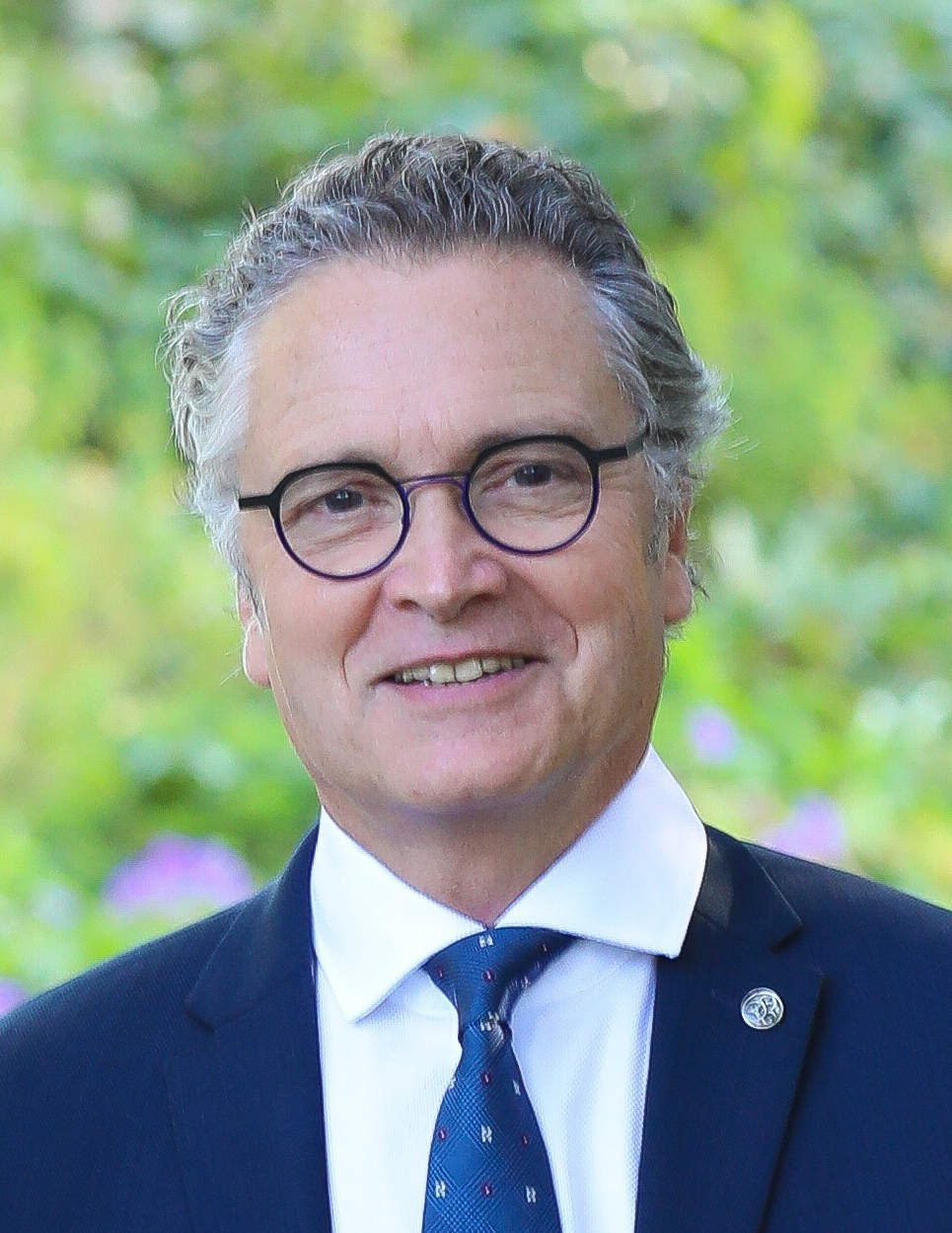
Interview With Philippe Gouet, President, Departmental Council of Loir-et-Cher; President, Health Working Group, Association of French Departments; First Vice-President, Gérontopôle Centre-Val de Loire
France’s territorial landscape is undergoing a profound shift, and departments are emerging as decisive actors in the response to medical deserts, demographic aging, and the widening gaps in prevention and mental health. In this interview, Philippe Gouet provides a rare, ground-level view of how local authorities are reshaping access to care and challenging long-standing assumptions about centralized governance. His insights reveal both the urgency of reform and the pragmatic tools already taking shape across the country.
“Our health system is under severe pressure. We are reaching a point where the model itself must evolve.”— Philippe Gouet
PharmaBoardroom: How would you describe your current responsibilities and the perspective you bring to healthcare policy across the French departments?
Philippe Gouet: I serve as President of the Departmental Council of Loir-et-Cher and chair the Health Working Group within Départements de France (French Departments Association), which brings together all 101 departments. Established in 2021, this group was designed to bring territorial insight into national health policy. I also serve as First Vice President of the Gérontopôle Centre-Val de Loire, a body created in 2025 to help the [Loire Valley] region address rapid demographic aging. Almost 1 in 4 residents is already over age 65 years, and this proportion is expected to rise sharply by 2040. The Gérontopôle provides the expertise needed to support coherent regional policies on aging, prevention, and autonomy.
These responsibilities offer a direct vantage point on the pressures facing our health system. Demographic change and the rise of chronic disease have outpaced our ability to adapt. At the same time, France suffers from a structural shortage of physicians. According to Eurostat, the country ranks second to last in the European Union for medical density, with around 319 physicians per 100,000 inhabitants, compared with 656 in Greece and 573 in Portugal. This gap is felt most acutely at the territorial level, where departments must manage the practical consequences of reduced access to care. All these pressures converge locally, which is why departments are taking a more assertive role and why I believe that a stronger territorial contribution to health planning and prevention has become essential for the country.
PB: How have you defined the priorities of the Health Working Group since 2021, and what concrete actions have departments taken to improve access to care?
PG: Since 2021, our work has focused on giving departments practical tools to strengthen access to care and make their territories more attractive to health professionals. Prevention has been another priority, rooted in departments’ responsibility for middle schools. This includes improving school catering with more local sourcing, nutrition workshops led by dietitians, and initiatives on screen use, posture, and spinal health.
Physiotherapists run “Protège ton dos” (“Protect Your Back”) sessions that teach pupils basic ergonomics, from backpack weight to early signs of scoliosis or kyphosis. Many departments also work to reengage adolescents in organized sports after the postpandemic decline, sometimes through a dedicated sport-and-culture voucher for first-time club enrollment. These actions respond to a clear concern: according to a World Health Organization report from July 2022, 40% of French youths aged 12 to 16 years are overweight, and 10% live with obesity.
PB: The Gérontopôle Centre-Val de Loire was created to address rapid demographic aging. How is it helping the region organize prevention and care more coherently?
PG: The aging of the population is a European challenge, but regions like Centre-Val de Loire are moving faster than most and require tailored responses. The Gérontopôle’s priority has been to standardize training for professionals working with older people, whether in home care or the broader health and social care system, where practices can vary widely. Establishing consistent, high-quality skills across these roles is essential because they underpin autonomy and quality of life.
Prevention is the second major focus. For 2025, we chose to concentrate on nutrition, given its direct impact on healthy aging. We are preparing a guidance document for EHPAD (residential care home for dependent elderly people) directors, hospital teams, general practitioners, and residents over 70 years. It will clarify frequent misconceptions, offer practical dietary advice, and provide simple recipes adapted to older adults’ needs. The aim is to encourage daily habits that support functional capacity.
Many older people face financial constraints. By collaborating with companies, we look for solutions that are both nutritious and affordable.
Our work also extends to the Silver Economy, which brings together companies active in areas such as health, autonomy, adapted housing, mobility, nutrition, and technologies that promote aging well. High-quality food products, for example, can be costly, and many older people face financial constraints. By collaborating with these companies, we look for solutions that are both nutritious and affordable. Similar partnerships help local authorities create senior-friendly environments, from adapted housing and accessible public spaces to equipment that supports day-to-day independence.
The Gérontopôle positions itself as the region’s hub for expertise on aging well. It brings research, innovation, and service providers together, and supports municipalities and intercommunal structures that want to build coherent strategies for accessibility, prevention, and long-term autonomy. Its mission is to provide structure and visibility to these efforts so the region can respond more effectively to the demographic transition already underway.
PB: How do you expect direct access to specialists and other health professionals to evolve, and how does this link to the broader challenge of medical deserts?
PG: Direct access to specialists already exists in France, but patients who bypass their general practitioner face lower reimbursement from the National Health Insurance (Assurance maladie), which naturally discourages it. This is why we support expanding direct access in well-defined situations where it simplifies care without compromising safety. Advanced Practice Nurses could manage specific conditions directly once the National Academy of Medicine, the licensing bodies, and the French National Authority for Health have set the framework.
Physiotherapists are another example. Their training now allows them to identify red flags and refer patients when needed. For common musculoskeletal problems such as minor sports injuries, sprains, or uncomplicated lower back pain, direct access would make care both faster and more efficient, particularly within multidisciplinary practices where doctors and therapists already work side by side. Progress is slow, mainly because some medical unions want to preserve traditional prerogatives, but the direction is set and will advance through targeted pathways.
Prevention delivers benefits over the long-term, yet its initial costs appear immediately in budgets that have been under strain for many years. This has slowed the emergence of a genuine prevention culture despite the scale of public health needs.
These questions are inseparable from the reality of medical deserts. Loir-et-Cher is officially classified as one, which is why we launched “41 en bonne santé” (“Healthy 41”), our 2022-2028 territorial health plan. With an investment of about €25 million, it outlines 9 strategic actions to improve access to care, reinforce prevention, and make the department more attractive to health professionals. The program blends installation support, incentives for students, school-based prevention, telemedicine expansion, and the development of a local health campus to train and retain practitioners.
PB: France’s investment in prevention remains significantly lower than in several European countries. How do you see this situation, and what role can departments play in strengthening preventive health?
PG: Prevention remains one of the most fragile elements of our health system. It accounts for only around 3% of National Health Insurance expenditure, a level that lags what comparable European countries dedicate to this area. The tension is well known. Prevention delivers benefits over the long-term, yet its initial costs appear immediately in budgets that have been under strain for many years. This has slowed the emergence of a genuine prevention culture despite the scale of public health needs.
Departments already carry significant preventive responsibilities through the Maternal and Child Health Protection Service (PMI), which is embedded in the Public Health Code. The PMI provides follow-up for pregnant women and for children up to 6 years old, and many departments now incorporate the national framework of the First 1000 Days, even though this is not formally mandated. It complements existing PMI work and reinforces early support for families. Beyond these statutory missions, departments have broadened prevention programs in middle schools. Workshops on nutrition, ergonomics, screen use, and basic posture aim to help pupils develop habits that will shape their health over time. The principle is straightforward. To influence long-term behaviors, intervention must start early, when daily routines are still forming.
Departments also act as operational relays for national vaccination campaigns, such as the free and nonmandatory human papillomavirus vaccination program. Their role is to inform families, support school leaders, and ensure that the campaign is effectively deployed. These efforts extend into school governance, where elected representatives help relay information to parents. The same logic applies to national prevention initiatives such as “Pink October” or “Tobacco-Free November,” which departments amplify across local networks.
With stronger financial capacity, departments could go further. Screening rates make this clear. Participation in breast cancer screening has fallen compared with 4 or 5 years ago, and colorectal cancer screening remains low nationwide. These gaps often reflect barriers that are visible only at the local level, from lack of information to logistical hurdles. With greater decentralization of prevention and its funding, departments could shape programs more precisely to their populations, strengthen early detection, and address persistent inequalities more effectively.
PB: Looking 3 or 4 years ahead, what progress do you most hope to see?
PG: France needs to move beyond the short annual rhythm set by the Social Security Financing Bill and adopt a genuine multiyear health programming law. This approach already exists in defense, and there is no reason it should not apply to health. The current framework, built around the National Health Insurance Expenditure Target, foresees increases of only 0.9% for ambulatory care and 1.6% for hospitals in 2026. These levels do not allow institutions to function sustainably. The strain is already clear. In 2024, the 32 university hospitals recorded a combined deficit close to €2 billion, the wider public hospital sector reached nearly €3 billion, and around 60% of private clinics reported losses. In this context, hospitals can neither invest nor plan.
Participation in breast cancer screening has fallen compared with 4 or 5 years ago, and colorectal cancer screening remains low nationwide. These gaps often reflect barriers that are visible only at the local level.
Short-term budgeting also weakens national initiatives. The Assises de la pédiatrie et de la santé de l’enfant (National Conference on Pediatrics and Child Health, a major government-led consultation) produced a thorough report, Investir dans la santé de l’enfant: une urgence nationale (Investing in Children’s Health: A National Emergency), which sets out 20 measures across 6 strategic areas, from mental health to prevention and support for vulnerable children. Yet none of these proposals has been implemented, which illustrates how difficult it is to advance structural reforms without long-term visibility.
These priorities link directly to the broader national focus on the First 1000 Days, but they require stable multiyear resources to become operational. A health programming law would offer that foundation. It would align priorities with available resources, restore coherence in decision making, and give the system the sustained direction it has lacked for many years.
PB: What would you say to an international audience observing France’s current health landscape?
PG: The reality is that our health system is under severe pressure. Other European countries face similar difficulties, but we are reaching a point where the model itself must evolve.
Two conditions are essential. The first is this long-term programming law, which would finally bring stability and predictability. The second is a meaningful decentralization of health governance, with departments taking a stronger role. They operate at the right scale, with enough proximity to understand local needs and enough capacity to coordinate actors. Communes [local municipalities] are too small, intercommunal structures remain limited, and regions often cover territories that are too vast and heterogeneous. Departments represent the pragmatic middle ground. With national funding and a clear mandate, they could help restore access to care and rebuild the foundation of the system.