Bulgarian Experience Underscores How Regional Variabilities Complicate Stroke Prevention in Europe
Andreyan Georgiev, MPharm; Adriana Dacheva, PhD; Georgi Slavchev, PhD; Yoanna Vutova, MPharm; Adriana Krasteva, MSc, HTA Ltd., Sofia, Bulgaria
Bulgaria is experiencing significant progress in stroke prevention through observance of the country’s first National Stroke Awareness Day on November 11, 2025, and the expansion of specialized stroke treatment centers equipped with advanced imaging and thrombolysis capabilities. However, these promising developments face substantial challenges, as the Bulgarian population has among the highest rates of hypertension and smoking in the European Union (EU), but also significant prevalence of diabetes and obesity. Bulgaria’s stroke mortality rate is 4 times higher than the EU average, with stroke incidence also comparatively high.1,2
Primary stroke prevention requires a multilevel approach encompassing individual-level interventions and public health policies. Addressing risk factors such as hypertension, smoking, dyslipidemia, obesity, unhealthy diet, physical inactivity, diabetes mellitus, excessive alcohol intake, and psychosocial factors is crucial. However, the variability of European countries’ ability to improve awareness and management of these risk factors highlights the need for consistent guidelines and coordinated efforts. The burden of stroke can be reduced—and public health outcomes improved—by implementing effective primary prevention strategies.
We conducted a literature review as well as a search and comparison of published guidelines for primary prevention of cardiovascular disease across Europe. To identify key risk factors for stroke, such as hypertension, smoking, dyslipidemia, unhealthy diet, physical inactivity, obesity, diabetes mellitus, heart disease, excessive alcohol intake, and psychosocial factors, we analyzed the existing literature published in English since 2013 in Europe, focusing on Bulgaria, and indexed in PubMed, ScienceDirect, and other relevant databases. Variations in these risk factors across different territories, age groups, sexes, and ethnicities were considered. We also investigated the prevalence and control of risk factors, as well as the awareness and guidelines for primary prevention specific to each country.
Primary stroke prevention involves 2 integral components: promoting a healthy lifestyle at the patient level by implementing measures to improve socioeconomic and educational status and reducing air pollution at the public health level. However, there are wide variations between European countries in the prevalence and control of risk factors. Some countries have well-established healthcare systems and comprehensive guidelines for primary prevention, while others lack a clear allocation of responsibility. Also, there are no generally accepted European guidelines regarding risk factors and appropriate age ranges when defining target populations for screening.
The burden of stroke can be reduced—and public health outcomes improved—by implementing effective primary prevention strategies.
Risk Factors for Stroke
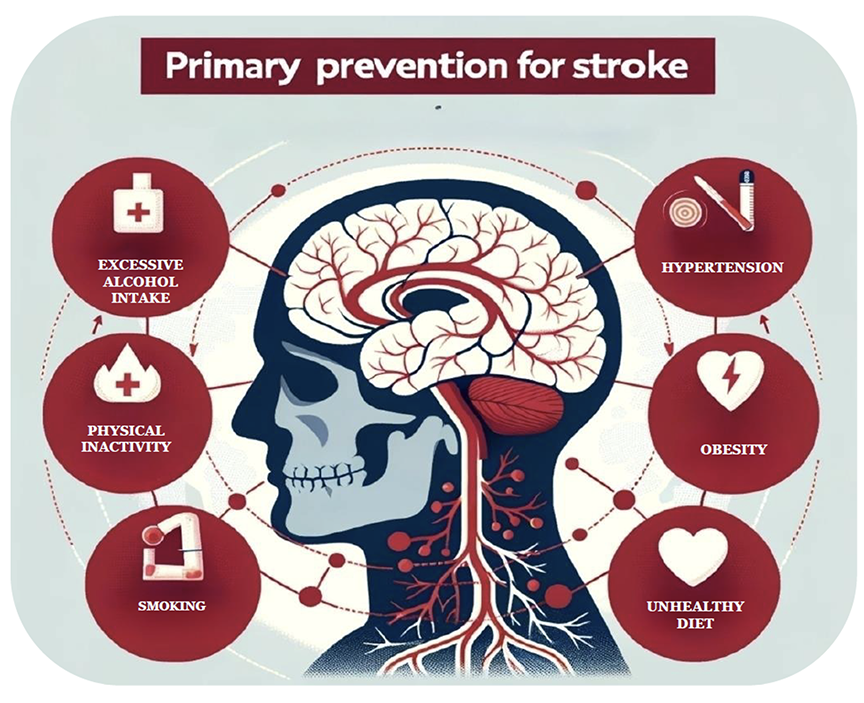
High blood pressure is the most significant risk factor for stroke. It damages blood vessels, making them more likely to become blocked.3 Smoking accelerates atherosclerosis and increases blood clot formation, both of which can lead to stroke.3 High levels of low-density lipoprotein (LDL) cholesterol and low levels of high-density lipoprotein (HDL) cholesterol (dyslipidemia) contribute to the buildup of plaques in arteries, increasing stroke risk. An unhealthy diet high in saturated fats, trans fats, and cholesterol can lead to atherosclerosis. Diets low in fruits, vegetables, and whole grains are also linked to higher stroke risk. Lack of physical activity contributes to several stroke risk factors, including obesity, hypertension, and diabetes. Excess body weight (obesity) increases the risk of hypertension, diabetes, and dyslipidemia, all of which are stroke risk factors.3,4 Diabetes mellitus damages blood vessels and increases the likelihood of atherosclerosis, leading to a higher risk of stroke. Heart diseases such as atrial fibrillation and heart failure increase the risk of blood clots forming in the heart, which can travel to the brain and cause a stroke. Excessive alcohol intake: heavy drinking can increase blood pressure and contribute to the development of atrial fibrillation, both of which are stroke risk factors. Psychosocial factors such as stress, depression, and social isolation have been linked to an increased risk of stroke, possibly due to their effects on blood pressure and lifestyle behaviors (Figure).3,4
Figure. Risk factors most related to stroke incidence
Variations across different groups:
The prevalence of stroke risk factors varies significantly across different regions. For example, hypertension and smoking rates are higher in some low- and middle-income countries. Older adults have an elevated risk for stroke due to the cumulative effects of risk factors over time. However, younger adults with conditions like hypertension or diabetes are also at risk. Women have unique risk factors such as pregnancy-related conditions, certain types of birth control, and hormone replacement therapy. Men generally have a higher risk of stroke at younger ages, but women’s risk increases significantly after menopause. Stroke risk factors and their prevalence also can vary widely among different ethnic groups. For instance, black individuals have higher rates of hypertension and diabetes, contributing to a higher stroke risk compared with white individuals.4
Variations across different countries:
Countries like Russia, Poland, and Hungary have higher rates of hypertension compared to Western European countries like France, Germany, and the United Kingdom, which have more effective hypertension management programs.5 Smoking prevalence is notably higher in countries like Greece, Bulgaria, and Latvia, while Scandinavian countries, such as Sweden and Norway, have lower smoking rates due to strong antismoking policies.6 Dyslipidemia is a common risk factor across Europe, but its prevalence and management vary. Western European countries generally have better lipid management programs.5
Mediterranean countries like Italy and Spain have healthier dietary patterns that contribute to lower stroke risk. In contrast, countries in Eastern Europe tend to have diets higher in saturated fats and lower in fruits and vegetables.7 Physical inactivity varies widely, and it is more prevalent in Eastern European countries, compared to Western and Northern Europe, where there is a stronger culture of physical activity.7 Diabetes mellitus is more prevalent in Southern European countries like Portugal and Greece; conversely, Scandinavian countries have more effective diabetes management programs.5
Countries like Russia and Belarus have higher rates of excessive alcohol consumption, while Mediterranean countries tend to have moderate alcohol consumption patterns.6 Higher levels of stress and social isolation are reported in Eastern European countries, contributing to higher stroke risk.6
Bulgaria faces a particularly challenging epidemiological landscape regarding stroke risk factors. The country demonstrates higher prevalence rates of several major cardiovascular risk factors compared to other European nations, including hypertension, dyslipidemia, and critical lifestyle factors such as smoking and alcohol intake. According to the European Society of Cardiology’s country profile for Bulgaria,8 these elevated risk factor rates contribute significantly to the country’s cardiovascular disease burden. More recent evidence confirms that while hypertension awareness and treatment rates have shown some improvement, control rates remain suboptimal compared to Western European standards, with the World Health Organization hypertension profile for Bulgaria indicating substantial gaps in effective blood pressure management at the population level.9
Lifestyle risk factors present additional concerns. Smoking prevalence in Bulgaria remains among the highest in the European Union, and dietary patterns reveal considerable deviation from recommended Mediterranean or heart-healthy diets. Studies of Bulgarian dietary habits10,11 indicate high consumption of processed foods, saturated fats, and salt, combined with insufficient intake of fruits, vegetables, and whole grains—patterns that directly contribute to hypertension, obesity, and metabolic syndrome. These dietary trends, coupled with relatively low rates of regular physical activity, create a compounding effect on stroke risk.
This convergence of poorly controlled risk factors and adverse lifestyle patterns underscores the urgent need for comprehensive, multilevel prevention strategies in Bulgaria. Addressing this burden requires not only enhanced clinical management of conditions like hypertension and dyslipidemia but also broad public health initiatives targeting smoking cessation, alcohol reduction, and dietary improvement, alongside systematic efforts to increase physical activity across the population.8-13
Beyond high risk-factor prevalence, Bulgaria faces critical gaps in stroke awareness. Data from the Safe Implementation of Treatments in Stroke report reveals that fewer than 2% of respondents in Northeast Bulgaria could identify smoking or high blood pressure as stroke risk factors, indicating severe deficits in basic stroke literacy despite existing public health campaigns.14 This awareness gap extends to clinical settings, where one-third of surveyed clinicians reported that patients do not fully understand information about oral anticoagulants and stroke prevention, highlighting problems with both baseline knowledge and clinical communication.15
These findings underscore that effective stroke prevention requires addressing awareness deficits alongside biological risk factors through targeted health literacy campaigns, culturally appropriate educational materials, improved patient-clinician communication, and systematic evaluation of prevention initiatives. Without addressing this fundamental knowledge gap, even optimal clinical interventions and treatment infrastructure will fall short of reducing Bulgaria’s stroke burden.14-16
Without addressing the fundamental knowledge gap, even optimal clinical interventions and treatment infrastructure will fall short of reducing Bulgaria’s stroke burden.
Prevention Strategies
1. Education/public health campaigns:
Stroke prevention efforts in Bulgaria have primarily emphasized secondary prevention and acute response rather than comprehensive primary prevention. National observance of World Stroke Day and related awareness campaigns have predominantly focused on recognition of stroke symptoms using the FAST (Face drooping, Arm weakness, Speech difficulty, Time to call 911) protocol and the importance of rapid treatment access. While valuable for reducing treatment delays and improving mortality outcomes, these initiatives do not directly address stroke incidence reduction through primary prevention of modifiable risk factors.
Evidence from the European Burden of Stroke report indicates that effective awareness campaigns depend heavily on sustained duration, target population specificity, and integration with clinical services.7 Bulgaria would benefit from a strategic shift toward comprehensive primary prevention campaigns combining mass media education with community-based interventions, clinical screening programs integrated with primary care, and systematic approaches targeting hypertension control, smoking cessation, dietary modification, and physical activity promotion. Successful models from other European countries demonstrate that multichannel campaigns addressing specific risk factors can achieve measurable reductions in stroke incidence when adequately resourced and systematically implemented over time.16
2. Pharmaceutical treatment:
Antihypertensive medications: Managing high blood pressure is crucial as it is a major risk factor for stroke. Common medications include ACE inhibitors, beta-blockers, and diuretics.17 These are widely prescribed and have shown effectiveness for reducing stroke risk. However, adherence to medication regimens can be inconsistent due to factors like side effects, cost, and patient education. Medication adherence and prescribing patterns in Bulgaria present a mixed picture. Antihypertensive medication adherence appears relatively favorable compared to other European countries, yet adequate blood pressure control is not consistently achieved, indicating issues with dosing optimization or therapeutic inertia. This gap between adherence and control highlights that medication availability alone is insufficient without appropriate clinical management.18,19
Statins and antiplatelet agents: Statins help lower cholesterol levels, reducing the risk of stroke by preventing plaque buildup in the arteries.17 Medications like aspirin and clopidogrel help to ward off the formation of blood clots, which can lead to strokes.17 These are commonly used and have strong evidence supporting their effectiveness. Real-world data generally supports their use, but as with antihypertensives, adherence can be an issue.20
Anticoagulants: For individuals with atrial fibrillation, anticoagulants such as warfarin or newer agents like dabigatran are prescribed to prevent stroke. For anticoagulation in atrial fibrillation, Bulgaria demonstrates prescribing rates (72%) similar to other Balkan countries, with notably the highest regional rate of non-vitamin K antagonist oral anticoagulant (NOAC) prescription, potentially reflecting clinician awareness of their practical advantages and improved adherence profiles. However, one-third of Bulgarian clinicians report that patients do not fully understand information about oral anticoagulants and their stroke prevention role, suggesting prescription rates do not ensure effective treatment. Public awareness campaigns specifically addressing anticoagulation in atrial fibrillation and cardioembolic stroke prevention remain underdeveloped, representing an important target for future educational initiatives.20,21
3. Nonpharmaceutical treatment:
Adopting a healthy diet rich in fruits, vegetables, whole grains, and lean proteins can help manage weight, blood pressure, and cholesterol levels. Also, regular physical activity helps maintain a healthy weight and reduces blood pressure and cholesterol. However, implementation can be challenging due to socioeconomic factors, cultural differences, and varying levels of public health infrastructure.
Quitting smoking reduces the risk of stroke significantly. Public health campaigns have had some success, but smoking and excessive alcohol consumption remain significant issues in many regions. Limiting alcohol intake can help control blood pressure and reduce stroke risk.
Stress management techniques such as mindfulness, meditation, and yoga can help reduce stress, which contributes to stroke risk. However, their integration into mainstream healthcare is still evolving. Regular checkups to monitor blood pressure, cholesterol levels, and other risk factors can help in early detection and management, thereby preventing strokes. However, healthcare infrastructure and socioeconomic barriers could limit access to regular screenings.
For individuals with significant carotid artery stenosis, revascularization procedures can reduce stroke risk. Three techniques exist: carotid endarterectomy, carotid artery stenting, and transcarotid artery revascularization. Determining the best candidates for each type of revascularization procedure is crucial. It involves assessing the severity of stenosis, patient comorbidities, and overall risk profile. The cost of procedures and insurance coverage can influence patient access to these interventions.22
Multichannel campaigns addressing specific risk factors can achieve measurable reductions in stroke incidence when adequately resourced and systematically implemented over time.
Implications for Key Stakeholders
Learning about the importance of lifestyle changes and the role of medications in preventing stroke empowers patients to take proactive steps in managing their health. Adopting recommended lifestyle changes and adhering to prescribed medications can significantly reduce the risk of stroke and improve overall health. Public health authorities need to implement comprehensive policies promoting hypertension control, smoking cessation, healthy nutrition, and physical activity, while policy makers should support evidence-based legislation addressing tobacco use, dietary patterns, air pollution, and socioeconomic disparities. Such multilevel strategies enable better resource allocation toward cost-effective prevention rather than expensive acute treatment. Bulgaria’s current initiatives in awareness and treatment infrastructure provide a foundation, but meaningful reductions in stroke burden require sustained commitment to primary prevention across all societal levels.22,23
The establishment of National Stroke Awareness Day and expansion of specialized stroke centers in Bulgaria represent important progress, yet also highlight the complexities of primary stroke prevention in a country with high risk-factor prevalence and critically low public awareness. Bulgaria’s experience underscores the need for multilevel strategies integrating public health education, clinical screening, and policy interventions targeting modifiable risk factors. The substantial variations in risk factor control and awareness across European countries reinforce the need for consistent, evidence-based guidelines that can be effectively adapted across diverse populations and healthcare systems to achieve meaningful reductions in stroke incidence and improve cardiovascular outcomes throughout Europe.
References
- Vutova Y, Dacheva A, Slavchev G, Djambazov S. Epidemiology of stroke in Bulgaria [ISPOR Europe abstract EPH170]. Value Health. 2023;26(12):S235.
- Powles J, Kirov P, Feschieva N, Stanoev M, Atanasova V. Stroke in urban and rural populations in North-East Bulgaria: Incidence and case fatality findings from a `hot pursuit’ study. BMC Public Health. 2002;2(1):1-9. doi:10.1186/1471-2458-2-24
- Hong C, Pencina MJ, Wojdyla DM, et al. Predictive accuracy of stroke risk prediction models across black and white race, sex, and age groups. JAMA. 2023;329(4):306-317. doi:10.1001/jama.2022.24683
- Visseren FLJ, Mach F, Smulders YM, et al. 2021 ESC Guidelines on cardiovascular disease prevention in clinical practice. Eur Heart J. 2021;42(34):3227-3337. doi:10.1093/eurheartj/ehab484
- Prendes CF, Rantner B, Hamwi T, et al. Burden of stroke in Europe: An analysis of the global burden of disease study findings from 2010 to 2019. Stroke. 2024;55(2):432-442. doi:10.1161/STROKEAHA.122.042022
- Ferrario MM, Veronesi G, Kee F, et al. Determinants of social inequalities in stroke incidence across Europe: A collaborative analysis of 126,635 individuals from 48 cohort studies. J Epidemiol Community Health. 2017;71(12):1210-1216. doi:10.1136/jech-2017-209728
- King’s College London. 1.2 Incidence – How many people have a stroke? The Burden of Stroke in Europe Report. Stroke Alliance for Europe. https://strokeeurope.eu/index/the-burden-of-stroke-in-europe/incidance-how-many-people-have-a-stroke/. Published May 11, 2017. Accessed January 14, 2026.
- Goshev E. Country Report Bulgaria - Health Care, Risk Factors, Prevention Actors and Activities, Cardiac Rehabilitation and Future. European Society of Cardiology. http://www.euro.who.int/en/data-and-evidence/databases/european-health-for-all-database-hfa-db. Published June 2014. Accessed January 14, 2026.
- World Health Organziation. Bulgaria - Hypertension Profile. https://cdn.who.int/media/docs/default-source/country-profiles/hypertension/hypertension-2023/hypertension_bgr_2023.pdf. Published September 19, 2023. Accessed January 14, 2026.
- Gruev I, Tsanova-Savova S. Trends in the dietary habits of the Bulgarian population during a nine year period 2010-2018. J Hypertens. 2021;39(Supplement 1):e321-e322. doi:10.1097/01.hjh.0000748208.95318.ea
- LOGO Research. Bulgaria Eats: Insights into Eating Habits. https://www.logo-mrc.com/2021/06/23/bulgaria-eats-insights-into-eating-habits/. Published June 23, 2021. Accessed January 14, 2026.
- Tsalta-Mladenov ME, Andonova SP. Risk factors for ischemic stroke in Bulgaria. Rom J Neurol Rev Rom Neurol. 2021;20(1):41-49. doi:10.37897/RJN.2021.1.6
- Lazarova S, Petrova-Antonova D. Health-promoting behaviors in Bulgaria: A cross-sectional study on non-communicable diseases and lifestyle. Societies. 2025;15(1):15. doi:10.3390/soc15010015
- Dokova KG, Stoeva KJ, Kirov PI, et al. Public understanding of the causes of high stroke risk in northeast Bulgaria. Eur J Public Health. 2005;15(3):313-316. doi:10.1093/eurpub/cki086
- Runev N, Potpara T, Naydenov S, et al. Physicians’ perceptions of their patients’ attitude and knowledge of long-term oral anticoagulant therapy in Bulgaria. Medicina. 2019;55(7):313. doi:10.3390/medicina55070313
- King’s College London. 2.1 – Campaigns to encourage healthy lifestyles and risk factor awareness. The Burden of Stroke in Europe Report. Stroke Alliance for Europe. https://www.safestroke.eu/wp-content/uploads/2020/06/The-Burden-Of-Stroke-In-Europe-Report-Main-Document_ENG_All-references.pdf. Published May 11, 2017. Accessed January 14, 2026.
- Silver B. Primary Prevention of Stroke. Medscape. https://emedicine.medscape.com/article/323662-overview. Published April 2, 2024. Accessed January 14, 2026.
- Mitkova Z, Dimitrova E, Kazakova V, et al. Measuring adherence in hypertensive patients—pilot study with self-efficacy for appropriate medication use scale in Bulgaria. Medicina. 2025;61(3):478. doi:10.3390/medicina61030478
- Postadzhiyan A, Garkov K. Assessing blood pressure control and antihypertensive therapy in patients with hypertension: A comparison with one-year medical records data in Bulgaria (SNAPSHOT study). Eur J Prev Cardiol. 2024;31(Suppl 1). doi:10.1093/eurjpc/zwae175.167
- Ueberham L, Dagres N, Potpara TS, Bollmann A, Hindricks G. Pharmacological and non-pharmacological treatments for stroke prevention in patients with atrial fibrillation. Adv Ther. 2017;34(10):2274-2294. doi:10.1007/S12325-017-0616-6
- Potpara TS, Dan GA, Trendafilova E, et al. Stroke prevention in atrial fibrillation and “real world” adherence to guidelines in the Balkan region: The BALKAN-AF Survey. Sci Rep. 2016;6:20432. doi:10.1038/srep20432
- European Stroke Organization. SAP-E Essentials of Stroke Care. https://actionplan.eso-stroke.org/the-essentials-of-stroke-care. Published 2018. Accessed January 14, 2026.
- Dacheva A, Georgiev A, Vutova Y, Slavchev G, Djambazov S. Bulgaria national stroke program: Prevention strategies [ISPOR Europe abstract HPR1] Value Health. 2023;26(12):S255. doi:10.1016/j.jval.2023.09.1320