
Empathy by Design: Insights From Patients, Advocates, and Medical Writers to Advance Patient-Centered Communication in Medical Writing
Martha Gauthier, MA, Lumanity Communications Inc, Boston, MA, USA; Susan Daniels, MA, Lumanity Ltd, London, UK; Laura Watts, PhD, Lumanity Communications Inc, Yardley, PA, USA
 The Case for Empathetic Medical Writing
While there is no single definition for “empathy” in healthcare,1,2 it is often described as the ability to recognize a patient’s perspective and experience and to convey such understanding back to the patient.3 The perception of empathy has been linked to improved patient satisfaction, treatment adherence, clinical outcomes, and clinical competence.4-6 However, most studies assessing empathy in healthcare focus on interpersonal interactions (ie, face-to-face encounters in which both verbal and nonverbal cues can guide an exchange).4
Medical writing, by contrast, is inherently a one-way conversation intended to convey accurate, clear, and reliable information to support informed decision making by patients, clinicians, regulators, and researchers.7-9 Yet a focus on objectivity and technical accuracy in medical writing may create distance between the writer and the reader just as it does in face-to-face clinical encounters.
Despite its demonstrated value in healthcare, there is currently no standardized, objective way to assess empathy in medical writing. We can make the case for why empathy in medical writing matters, but the lack of a measurement framework prevents us from determining whether empathetic communication is being achieved.
We conducted a study to assess the extent to which patients/patient advocates and professional medical writers perceive empathy as important to scientific writing and to identify features they associate with the perception of empathy. Patients/advocates and medical writers were consulted to capture perspectives from 2 critical points in the communication process: that of individuals shaping the content at its inception and those engaging with and interpreting the final material. This dual-stakeholder approach intended to explore how empathy is both embedded during the writing process and perceived by an intended audience.
Assessing Empathy in Scientific Writing
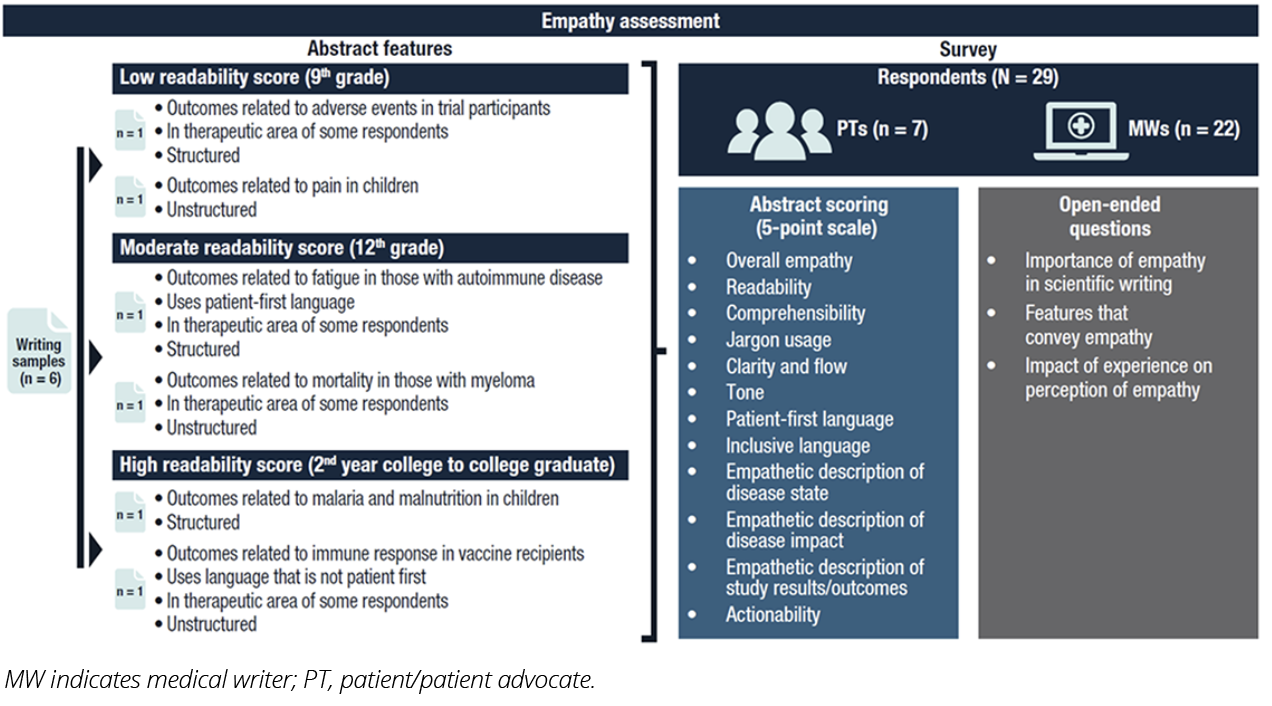
Two study groups (a group of patients/advocates and a group of medical writers) participated in an online survey in which they answered open-ended questions related to the importance of empathy in medical writing (Figure 1). Respondents also scored 6 scientific writing samples, which consisted of published, peer-reviewed scientific abstracts, ranging in readability level from 9th grade to college graduate. Writing samples were scored using a 5-point scale for 12 features: overall empathy, readability, comprehensibility, jargon usage, clarity and flow, tone, patient-first language, inclusive language, empathetic description of the disease state, empathetic description of the disease impact, empathetic description of the study results/outcomes, and actionability of the information. The writing samples were also evaluated using 7 additional standardized readability metrics. A definition for empathy was not provided at any point in the survey.
Figure 1. Study Design
Perception of Empathy: Patient and Professional Perspectives
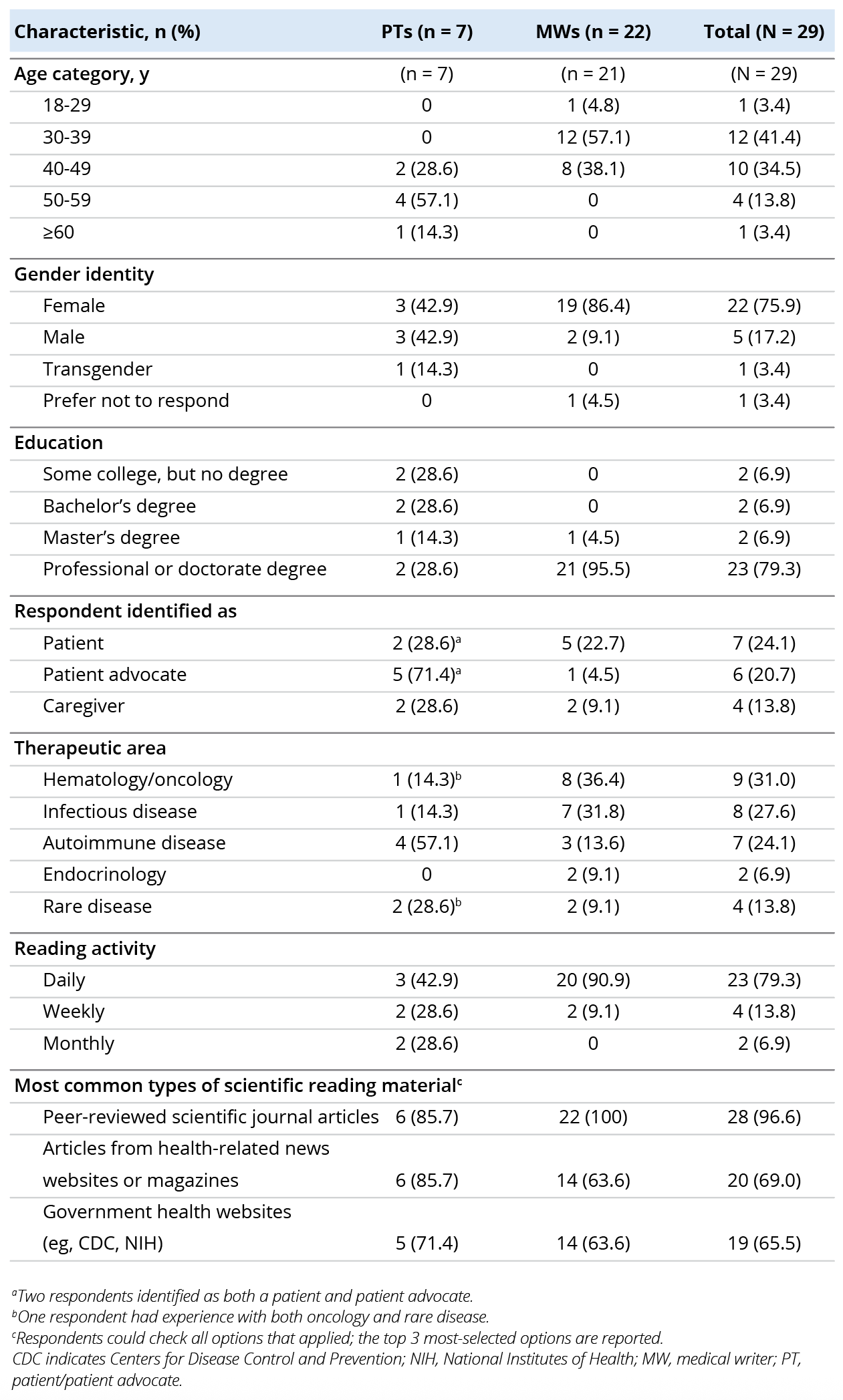
A total of 29 respondents with experience in 5 therapeutic areas participated in the study (Table 1). All patients/advocates were aged 40 years or older, while most of the writers were aged between 30 and 49 years. Most respondents were female (75.9%), held a master’s degree or higher (86.2%), and reported reading scientific or health-related information daily (79.3%).
Table 1. Survey Respondent Demographic Characteristics
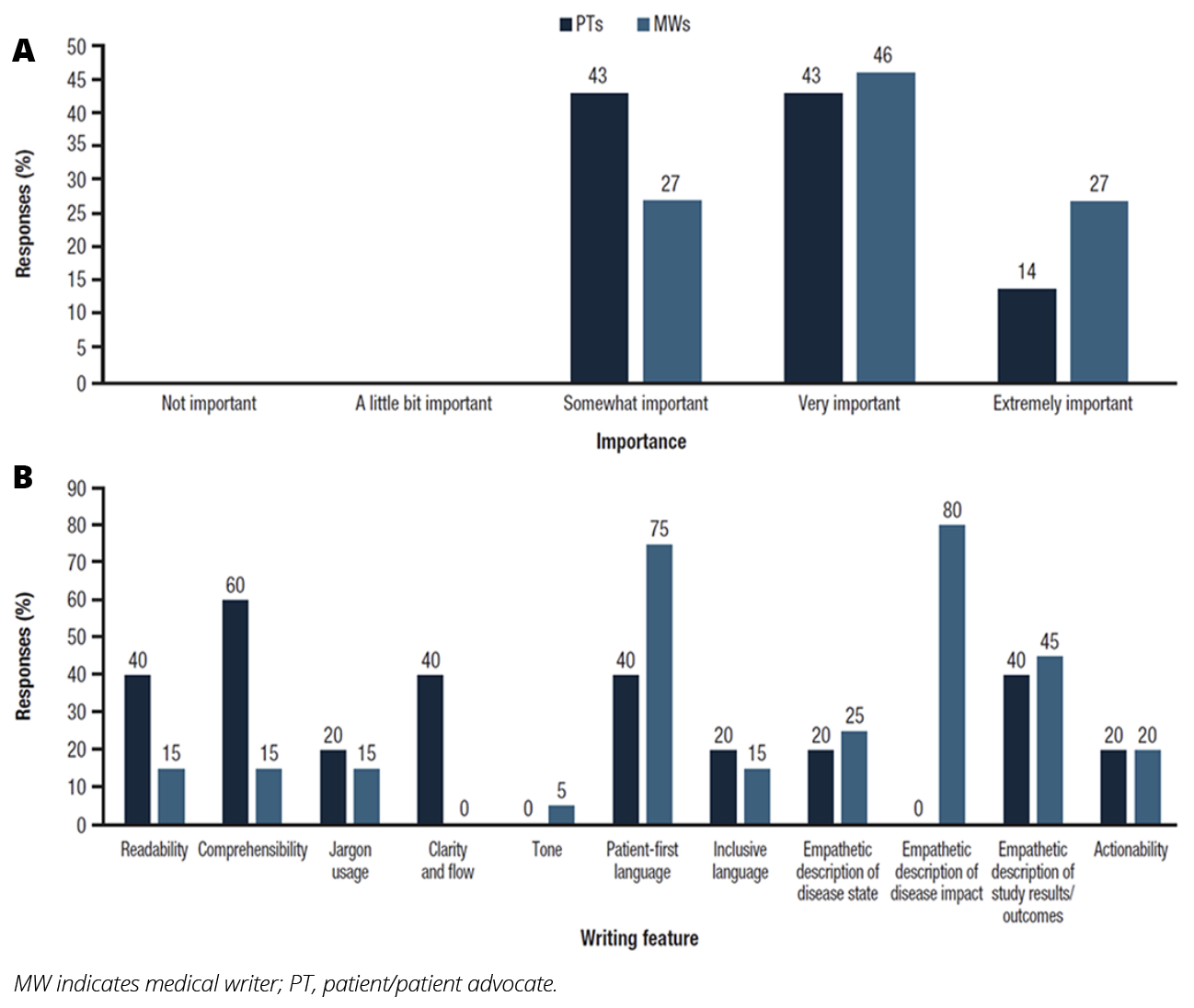
All patients/advocates and writers considered empathy to be at least somewhat important to medical writing, with 57.1% and 72.7%, respectively, rating empathy as very important or extremely important. When asked to rate which 3 of the measured features were most important to convey empathy in medical writing, patients/advocates frequently selected comprehensibility (60%), readability (40%), clarity and flow (40%), the use of patient-first language (40%), and an empathetic description of a study’s results/outcomes (40%) (Figure 2), while writers most frequently selected an empathetic description of a disease’s impact (80%), the use of patient-first language (75.0%), and an empathetic description of a study’s results/outcomes (45%).
Figure 2. (A) Overall Importance of Empathy and (B) Features Identified as Important to Convey Empathy in Medical Writing
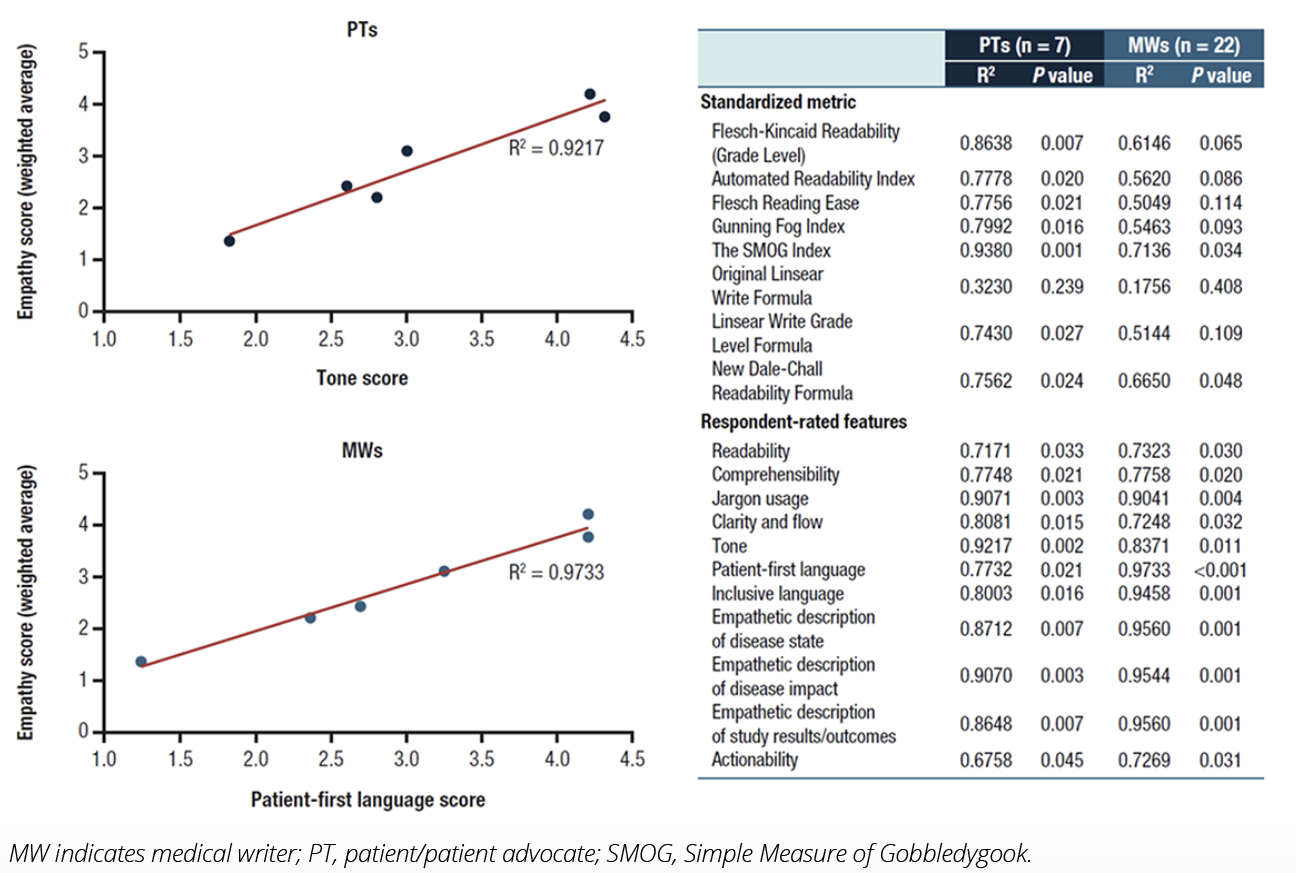
In the review of the writing samples, multiple features were strongly associated with the perception of overall empathy; however, the perception of an empathetic tone exhibited the strongest and most statistically significant correlation for patients/advocates (Figure 3). For writers, patient-first language exhibited the strongest and most significant correlation with empathy. For both groups, an empathetic description of a disease’s impact and jargon usage were also strongly and significantly correlated with the perception of empathy in the writing samples. When comparing readability scores from 8 standardized metrics with scores for empathy, the SMOG (Simple Measure of Gobbledygook) Index showed the strongest and most significant correlation for both groups.
Figure 3. R2 Coefficient and P Values Comparing
Empathy Scores With Standardized Metric Readability Scores and Writing
Feature Scores in the Medical Writing Samples
Interpreting the Findings: Measuring What Matters
While empathy in healthcare is commonly framed as the ability to understand a patient’s personal experience, this definition arguably falls short when applied to written medical communication. In this context, empathy must also encompass an understanding of how readers (whether patients, providers, or policy makers) receive, interpret, and respond to the information. This may involve recognizing the cognitive demands of complex literature, the emotional weight of health-related topics, and the impact of how information is framed, structured, and delivered. Ultimately, to meaningfully assess empathy in medical writing, a standardized metric is needed, and developing such a metric first requires a clear understanding of which features readers associate with empathetic communication.
Across both patients/patient advocates and medical writers, empathy was deemed as at least somewhat important, if not extremely important, to medical writing. However, the features considered most important for achieving empathetic communication differed between the 2 groups. Of the 11 features evaluated, patients/advocates prioritized features related to text accessibility (ie, readability, comprehensibility, and clarity and flow), whereas writers most often emphasized features associated with emotional framing. Both groups identified patient-first language as important, though patients/advocates selected this feature nearly half as often as writers. Both groups identified an empathetic description of a study’s results/outcomes relatively equally. But only writers identified an empathetic description of a disease’s impact, a feature not selected by any patients/advocates, as most important. Overall, these findings suggest that while both groups value empathy in medical writing, they may recognize it differently, with patients/advocates valuing accessible, easily understood writing, and writers emphasizing empathetic framing.
Overall, creating communications that resonate with all reader types should ultimately serve a single purpose: benefiting patients.
Although patients/advocates identified text accessibility–related features as most important in conveying empathy, the writing sample scoring data revealed a more nuanced relationship. When evaluating medical writing samples, tone exhibited the strongest and most significant correlation with perceived empathy above features of text accessibility. While still significant, features of text accessibility (ie, readability, comprehensibility, or clarity and flow) showed weaker correlations. This suggests that while patients/advocates may look for accessible language to convey empathy, in practice, their perception may be more strongly influenced by tone.
Among writers, the use of patient-first language demonstrated both perceived importance and the strongest, most significant correlation with empathy scores for the writing samples. This alignment implies that features writers are trained to use in medical writing may stand out more prominently in their perception of empathy.
While features such as readability can be readily quantified using established metrics, others, such as tone, are inherently more difficult to consistently measure. Advances in machine learning and natural language processing offer promising solutions to analyze the more nuanced aspects of medical writing. By combining these technologies with insights from diverse reader groups, it may be possible to develop a standardized metric for evaluating empathy in medical writing.
Overall, creating communications that resonate with all reader types should ultimately serve a single purpose: benefiting patients. When medical writing speaks effectively to patients, healthcare professionals, researchers, and regulators alike, it holds the potential to foster understanding, alignment, and trust across the continuum of care. For patients, empathetic writing should not simply inform; rather, it should connect with and respect their perspective. For researchers, empathetic writing can highlight the impact of patient outcomes and encourage more inclusive, ethically grounded study designs. And for regulators, it may help shape policies that resonate with public understanding and prioritize patient needs.
HEOR Professionals and Other Key Populations
As the primary audience of biomedical journal content, public health professionals and clinical practitioners warrant special consideration in the discussion of empathy in medical writing.10 Compassion fatigue, the gradual erosion of the capacity to express empathy due to prolonged exposure to suffering, is widely documented in healthcare and is associated with burnout.11,12 However, studies suggest that empathy may be protective against burnout by reducing depersonalization and promoting a greater sense of personal achievement.13 In this context, maintaining awareness of the individuals represented in clinical data is particularly important.
Incorporating empathetic language into medical communications may reinforce the patient-centered intent behind clinical science by reminding healthcare professionals that the outcomes reported in tables and figures ultimately reflect the lived experiences of individuals. While scientific objectivity remains essential to clinical decision making, empathetic framing may help ensure that clinical evidence is interpreted within its human context, thereby promoting better patient care.
Health economics and outcomes researchers also warrant special consideration in the discussion of empathy in medical writing, given their central role in evaluating value, outcomes, and healthcare decision making. While HEOR analyses often focus on quantifiable measures, such as cost-effectiveness, return on investment, and comparative value, the field has increasingly embraced patient-centered approaches that seek to both understand and measure the outcomes that are most important to patients.14-16
Incorporating empathetic framing into medical communications may help reinforce the connection between analytical findings and the personal health journeys they represent, ensuring that patients remain visible behind the economic models used to inform decisions. Furthermore, the HEOR community’s expertise in measuring complex and sometimes more intangible outcomes uniquely positions them to explore whether perceived empathy in medical communication can be quantified and how it may influence patient healthcare experiences or treatment-related behaviors.
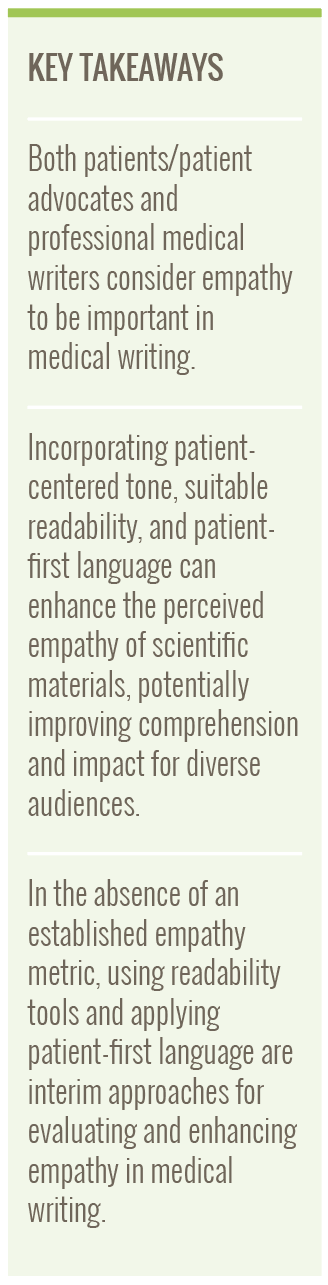
In short, empathy in medical writing should not be an afterthought. This research represents a first step toward developing a metric to evaluate, inform, and enhance the inclusion of empathy in medical writing. Overall, incorporating the features shown here to influence its perception, particularly tone, readability, comprehensibility, and patient-first language, may help writers craft communications that both inform and connect, fostering greater trust and understanding for the benefit of patients. In the absence of an established empathy metric, existing readability tools, specifically the SMOG Index, and the consistent use of patient-first language offer practical starting points while more direct measures continue to be developed.
AcknowledgmentsWe would like to thank all survey respondents for their time and participation. The study was funded by Lumanity Communications Inc.
References
1. Hall JA, Schwartz R, Duong F, et al. What is clinical empathy? Perspectives of community members, university students, cancer patients, and physicians. Patient Educ Couns. 2021;104(5):1237-1245. doi: 10.1016/j.pec.2020.11.001
2. Gerger H, Munder T, Kreuzer N, Locher C, Blease C. Lay perspectives on empathy in patient-physician communication: an online experimental study. Health Commun. 2024;39(6):1246-1255. doi: 10.1080/10410236.2023.2210380
3. Chen D, Lew R, Hershman W, Orlander J. A cross-sectional measurement of medical student empathy. J Gen Intern Med. 2007;22(10):1434-1438. doi: 10.1007/s11606-007-0298-x
4. Vieten C, Rubanovich CK, Khatib L, et al. Measures of empathy and compassion: a scoping review. PLoS One. 2024;19(1):e0297099. doi: 10.1371/journal.pone.0297099
5. Lelorain S, Bredart A, Dolbeault S, Sultan S. A systematic review of the associations between empathy measures and patient outcomes in cancer care. Psycho-Oncology. 2012;21(12):1255-1264. doi: 10.1002/pon.2115
6. Nembhard IM, David G, Ezzeddine I, Betts D, Radin J. A systematic review of research on empathy in health care. Health Serv Res. 2023;58(2):250-263. doi: 10.1111/1475-6773.14016
7. Lindsay DR. Scientific Writing = Thinking in Words. 2nd ed. CSIRO Publishing; 2020.
8. Iskander JK, Wolicki SB, Leeb RT, Siegel PZ. Successful scientific writing and publishing: a step-by-step approach. Prev Chronic Dis. 2018;15:E79. doi: 10.5888/pcd15.180085
9. Heaton-Shrestha C, Hanson K, Quirke-McFarlane S, et al. Exploring how members of the public access and use health research and information: a scoping review. BMC Public Health. 2023;23(2179). doi: 10.1186/s12889-023-16918-8
10. National Library of Medicine (US). Audience for the NLM Collection. Collection Development Guidelines of the National Library of Medicine [Internet]. https://www.ncbi.nlm.nih.gov/books/NBK518700/ Last updated July 6, 2018. Accessed March 13, 2026.
11. Deriglazov D, Halamová J, Kernová L. Burnout, compassion fatigue, and compassion satisfaction interventions via mobile applications: A systematic review and a meta-analysis. Worldviews Evid Based Nurs. 2025;22(3):e70033. doi: 10.1111/wvn.70033
12. Ye Q, Zhong X, Zhou Q, Liu H, Li G. Empathy fatigue among physicians and its influencing factors: a cross-sectional survey from Southwest China. BMC Psychiatry. 2024;24(780). doi: 10.1186/s12888-024-06217-w
13. Williams B, Lau R, Thornton E, Olney LS. The relationship between empathy and burnout - lessons for paramedics: a scoping review. Psychol Res Behav Manag. 2017;10:329-337. doi: 10.2147/PRBM.S145810
14. Linthicum MT, dosReis S, Slejko JF, Mattingly TJ 2nd, Bright JL. The importance of collaboration in pursuit of patient-centered value assessment. Patient. 2021;14(4):381-384. doi: 10.1007/s40271-020-00446-3
15. Clearfield E, Tambor E, Janssen EM, Messner DA. Increasing the patient-centeredness of health economics and outcomes research through patient engagement in core outcome set development. Patient. 2021;14(4):413-420. doi: 10.1007/s40271-020-00424-9
16. Pearson F, Bridge D, Stone M, Heron L, Riley D. From participation to partnership: Advancing patient-centric inclusive and equitable evidence generation in HEOR [ISPOR Europe abstract SA44]. Value Health. 2025;28(12):S653. doi: 10.1016/j.jval.2025.09.2985