Korea, South Africa, and Central America and the Caribbean Chapters Recognized for Their Leadership and Innovation in 2025
The ISPOR Chapter Awards recognize outstanding Regional Chapters that advance ISPOR’s mission through impactful activities in research, education, and member engagement. The chapters were evaluated on their achievements over the past year, including contributions to ISPOR publications, events, and collaborations with local stakeholders, and 3 Regional Chapters were commended for their performance in 2025.
Large-Sized Chapter Category – ISPOR 2025 Outstanding Regional Chapter

Hye-Young Kwon, PhD
President, ISPOR Korea Chapter
Associate Professor, Mokwon University
ISPOR: How has your chapter embraced innovation in HEOR, and what role do you see it playing in the future of the field?
Hye-Young Kwon: Our chapter has actively embraced innovation by fostering collaboration among academia, policy makers, and industry, with a particular focus on data-driven approaches such as real-world data/real-world evidence (RWD/RWE) and health technology assessment (HTA) processes. We’ve also ensured that our members remain connected to the latest global health economics and outcomes research (HEOR) trends by engaging in international conferences and knowledge exchanges.
In the future, we want to serve as a platform for sharing innovative ideas and bridging the gaps between academia, HTA authorities in Korea, and industry stakeholders. We will continue enhancing the knowledge of HTA stakeholders, contribute to the recognition of HEOR studies, and influence future HTA policies. By collaborating with other chapters, we also aim to strengthen the role of our chapter in advancing HEOR and HTA research and policy development in both Korea and Asia.
How does receiving the ISPOR Outstanding Chapter Award influence the legacy and future trajectory of your chapter?
Receiving the ISPOR Outstanding Chapter Award is a great honor that recognizes our dedication to excellence and collaboration. This achievement inspires us to expand our impact, reinforce partnerships, and strengthen our position as a leader in HEOR advancement at both regional and global levels. It adds to our legacy while motivating us to continue raising the visibility and influence of our chapter.
In your opinion, what are the key challenges currently faced by the HEOR field, and how can chapters contribute to addressing those challenges?
The HEOR field currently faces the following challenges:
- Balancing cost-effectiveness with equitable access, particularly for high-cost medicines and innovative therapies
- Bridging the gap between evidence generation and timely policy implementation
- Addressing affordability and access issues during coverage gap periods
- Maintaining methodological rigor while leveraging new data sources such as RWD/RWE
Our chapter contributes to overcoming
these challenges by fostering collaboration, creating opportunities for
dialogue between researchers and decision makers, and connecting scientific
evidence to real-world health policy decisions.
Through these efforts, we help ensure
that evidence-based insights translate into better healthcare access,
affordability, and outcomes.
What are your goals as a chapter awardee, and how do you plan to inspire and motivate others to contribute to the field of HEOR?
As an awardee, my goal is to build a
more inclusive and engaged HEOR community and spotlight the societal impact of
our work.
By showcasing the tangible policy impact of HEOR and recognizing the valuable contributions of our members, I hope to inspire others to actively participate. Through collaboration and a strong community focus, we can empower members to see the broader impact of their work and contribute to meaningful improvements in healthcare.
Medium-Sized Chapter Category – ISPOR 2025 Outstanding Regional Chapter
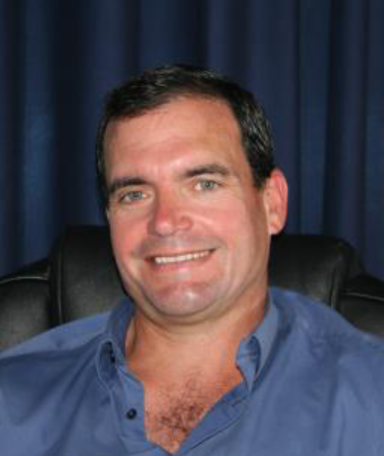
Mark Brand, MBA
President, ISPOR South Africa Chapter
Health Technology Strategy/Market Access Specialist and Owner, Brandtech Health Technology Consulting
ISPOR: How has your chapter embraced innovation in HEOR, and what role do you see it playing in the future of the field?
Mark Brand: ISPOR South Africa has steadily promoted the use and implementation of HEOR and associated economic methods for priority-setting since its creation in 2008. As the HEOR landscape in South Africa remains largely without formal guidelines or regulations, there is significant room for innovation and for promoting approaches that address healthcare needs within the HEOR space. This includes adopting new methods and pragmatic approaches to reimbursement challenges and decision-making processes.
However, the lack of guidelines and regulations also means that the reimbursement environment remains uncertain, with limited development in the use of real-world evidence and in establishing standards for digital health technologies. Where data are available from healthcare providers and administrators in South Africa, ISPOR SA has implemented a data grant initiative that links student researchers with these organizations to encourage and support real-world evidence generation.
There is also considerable work to be done in establishing multistakeholder national processes for health technology assessments (HTAs) and for generating evidence to inform such processes. South Africa’s National Health Insurance, which aims to achieve universal health coverage, emphasizes HTA but has so far provided limited guidance on processes and acceptable technical inputs. ISPOR SA and its membership are well-positioned to assist in reviewing existing processes and guidelines, ensuring they are implementable and aligned with global best practices, and supporting skills development to address capacity gaps.
How does receiving the ISPOR Outstanding Chapter Award influence the legacy and future trajectory of your chapter?
ISPOR South Africa’s relevance depends on its ability to provide education, training, and development in HEOR, as well as our capacity to influence policy processes so that HEOR becomes a central part of decision making for health programs and for making interventions available to patients.
Receiving this award will strengthen ISPOR SA’s credibility with both current and potential members—who span a diverse range of stakeholders in healthcare decision making—and with policy makers across government, research, academia, and private payer organizations.
In your opinion, what are the key challenges currently faced by the HEOR field, and how can chapters contribute to addressing those challenges?
Key challenges in South Africa include the limited availability of local data and the absence of established guidelines and standards. Methods adopted from other jurisdictions are often not supported by the necessary primary research to inform local methodologies and processes. These difficulties are compounded by the constrained allocation of monetary and other resources toward HEOR projects. Chapters can contribute by facilitating capacity-building initiatives, supporting local research, and promoting the adoption of contextually relevant guidelines.
What are your personal goals as a chapter awardee, and how do you plan to inspire and motivate others to contribute to the field of HEOR?
In preparation for the establishment of the Ministerial Advisory Committee on HTA, ISPOR SA is working to develop a single “submission template” for HTAs in South Africa. Historically, the system has been fragmented, with multiple duplicative processes, as every health maintenance organization and insurer runs its own assessment program using different criteria to determine the value of new technologies. We are optimistic that a clear standard for HEOR and its application in decision making will streamline development, investment, and capacity-building opportunities in both the public and private sectors.
Additionally, ISPOR SA continues to serve as a bridge between academia and the practical application of HEOR to reimbursement decision making, with potential for greater emphasis on HEOR alongside National Health Insurance initiatives. We are excited that the leadership and members of ISPOR SA are recognized as contributors to these developments.
Small-Sized Chapter Category – ISPOR 2025 Outstanding Regional Chapter
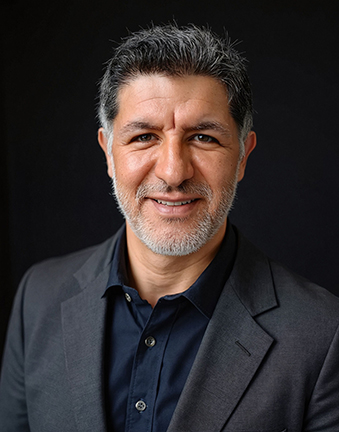
Fernando Bonilla, MD, MBA, MSc
President, ISPOR Central America and the Caribbean Chapter
Health Economics & Digital Health Consultant, Health Transformers 360
ISPOR: How has your chapter embraced innovation in HEOR, and what role do you see it playing in the future of the field?
Fernando Bonilla: Innovation is not always about doing new things—it’s also about doing things differently. From the outset, our chapter embraced innovation by fostering a dynamic, engaged community across multiple countries through remote working tools and active use of social networks. We prioritized value creation by listening to our members and codeveloping our agenda. Inspired by global trends, we promoted early patient involvement in health technology assessment (HTA) and formalized collaborations with patient organizations. We also maintained consistent engagement through our monthly “HEOR Wednesdays,” a dedicated virtual space held on the last Wednesday of each month—designed by and for the community to exchange experiences and knowledge in a safe environment. Finally, we strengthened collaboration with other ISPOR chapters (ie, Mexico, Argentina, Colombia, and Chile), recognizing that regional synergy is key to advancing HEOR in complex and fragmented systems.
How does receiving the ISPOR Outstanding Chapter Award influence the legacy and future trajectory of your chapter?
Receiving this award is a great honor and a powerful recognition of our team’s hard work. It reinforces that ISPOR values contributions from all regions—regardless of size—which is very inspiring. Beyond the educational grant, the award enhances the chapter’s visibility at a global level, opening the door to new collaborations and synergies with other ISPOR chapters.
More importantly, it energizes our members by reinforcing that they are not isolated in their region, but rather part of a global HEOR community. Motivation is essential for sustaining momentum in volunteer-driven initiatives, and this recognition not only helps us to stay focused on our goals but also inspires us to aim higher and set more ambitious objectives for the future.
[This award] reinforces that ISPOR values contributions from all regions—regardless of size—which is very inspiring.
In your opinion, what are the key challenges currently faced by the HEOR field, and how can chapters contribute to addressing those challenges?
While the challenges in HEOR vary by region and health system maturity, they exist everywhere. In Central America and the Caribbean, 2 key issues stand out. First, the development of HTA processes is still at an early stage, with limited institutional frameworks to support systematic evaluation. Second, even when HTA is conducted, the integration of its results into final health decision making remains weak or nonbinding. Chapters can serve as enablers of progress by promoting the development of HEOR in a way that is anchored in local realities. They can also foster multisectoral dialogue to find common ground among stakeholders, such as the need for long-term sustainability and patient-centered care, and translate evidence into policy through education, collaboration, and advocacy.
What are your personal goals as a chapter awardee, and how do you plan to inspire and motivate others to contribute to the field of HEOR?
One of my personal goals is to live up to the trust placed in me by the HEOR community as chapter president and to prioritize actions that generate real impact for patients. Helping another human being has always been a powerful source of motivation, and few fields offer such a clear path to that goal as healthcare. Today, health systems face major sustainability challenges, and this has sparked renewed interest, particularly among younger generations who increasingly choose healthcare over tech-related careers. The challenge is not to create motivation but to channel it effectively. By raising awareness of HEOR and its potential to improve health system performance and sustainability, we can engage and empower new contributors who are eager to make a meaningful difference.