
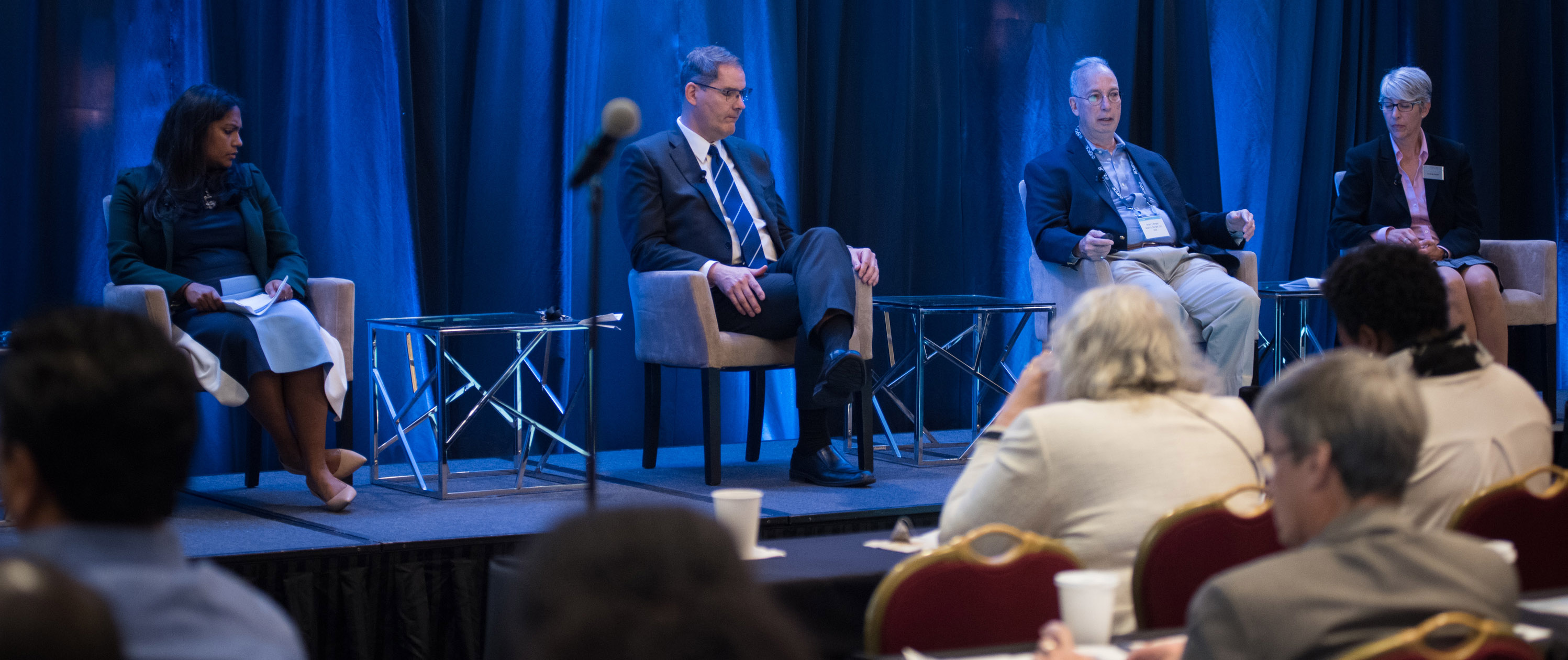
Real-world evidence on treatment outcomes can be an important aspect of the evidence basis for decision making if it is seen as credible. For real-world studies that are meant to test hypotheses about comparative-effectiveness or safety, a key aspect of credibility is that they are conducted transparently with tests that follow a prespecified analytic protocol. Preregistration of such study protocols on a public website would help build trust that their results can be used for decision-making purposes.
Establishing a Culture of Transparency for Real-World Evidence Studies...
The Real-World Evidence Transparency Initiative Partnership is a joint collaboration and ongoing effort between ISPOR, the International Society for Pharmacoepidemiology, the Duke-Margolis Center for Health Policy, and the National Pharmaceutical Council. The objective of this initiative is to establish a culture of transparency for study analysis and reporting of hypothesis evaluating real-world evidence studies on treatment effects.
Improving Transparency to Build Trust...
 The Real-World Evidence Transparency Initiative published a plan to encourage routine registration of noninterventional real-world evidence studies used to evaluate treatment effects. The report, “Improving Transparency to Build Trust in Real-World Secondary Data Studies for Hypothesis Testing—Why, What, and How: Recommendations and a Road Map from the Real-World Evidence Transparency Initiative,”
was published in the September 2020 issue of Value in Health.
The Real-World Evidence Transparency Initiative published a plan to encourage routine registration of noninterventional real-world evidence studies used to evaluate treatment effects. The report, “Improving Transparency to Build Trust in Real-World Secondary Data Studies for Hypothesis Testing—Why, What, and How: Recommendations and a Road Map from the Real-World Evidence Transparency Initiative,”
was published in the September 2020 issue of Value in Health.
More...
The report, “Improving Transparency to Build Trust in Real-World Secondary Data Studies for Hypothesis Testing—Why, What, and How: Recommendations and a Road Map from the Real-World Evidence Transparency Initiative,” was published in the September 2020 issue of Value in Health. The plan includes specifying the rationale for registering hypothesis-evaluating treatment effectiveness real-world evidence studies, the studies that should be registered, where and when these studies should be registered, how and when analytic deviations from protocols should be reported, how and when to publish results, and incentives to encourage registration.
ISPOR/ISPE Joint Real-World Evidence Transparency Position Statement
ISPOR—The Professional Society for Health Economics and Outcomes Research and the International Society for Pharmacoepidemiology (ISPE) have published a joint position statement on real-world evidence transparency.
Real-World Evidence Registry
The Real-World Evidence Registry provides researchers with a fit-for-purpose platform to register their study designs before they begin work to facilitate the transparency needed to elevate the trust in the study results.
More...
Real-world evidence studies can be used for hypothesis evaluation of treatment effects including safety (HETE studies). However these studies can also be perceived as less rigorous than clinical trials especially when not preregistered in a public setting such as ClinicalTrials.gov or the EU-PAS register.
ISPOR and its partners ISPE, NPC, and Duke Margolis have developed a simplified registration site especially for RWE HETE studies using secondary data. This searchable site provides a place for preregistration of studies that may not require registration for regulatory purposes but benefit from the rigor of transparent study methods and also provide a reference (such as a URL or doi) to share with peer reviewers, assessors, or other decision making bodies. Researchers can get started ‘here’ by creating a profile on the Open Sciences Framework and registering their study on the RWE Registry.
Shaking the Myth of Real-World Evidence
On-Demand Webinar
Learn more by watching the on-demand webinar, “Shaking the Myth of Real-World Evidence: Updates from the RWE Transparency Initiative.” This session provides updates from the initiative including a walk-through of the study registration site and updates on the special task force developing a standardized RWE protocol template.
Additional Resources
- Real-World Evidence Transparency Statement [ISPOR/ISPE]
- Real-World Evidence Registry
- Good Practices Reports and Other ISPOR Reports from Value in Health
- HARmonized Protocol Template to Enhance Reproducibility of Hypothesis Evaluating Real-World Evidence Studies on Treatment Effects: A Good Practices Report of a Joint ISPE/ISPOR Task Force
- "Improving Transparency to Build Trust in Real-World Secondary Data Studies for Hypothesis Testing—Why, What, and How: Recommendations and a Road Map from the Real-World Evidence Transparency Initiative"
- "Good Practices for Real-World Data Studies of Treatment and/or Comparative Effectiveness"
- "Reporting to Improve Reproducibility and Facilitate Validity Assessment for Healthcare Database Studies V1.0"
- "Unlocking the Promise of Real-World Evidence" (Value & Outcomes Spotlight, Vol. 6, No. 5)
- ISPOR's Real-World Evidence Strategic Initiatives




Conferences & Summits

November 8, 2026
<div><h4 data-start="54" data-end="133"><strong data-start="54" data-end="133">Apply causal inference methods to real-world evidence and clinical research</strong></h4><p>This course introduces causal inference principles and methods to support decision-making using real-world evidence (RWE) and clinical trial data. It focuses on addressing bias, defining appropriate causal estimands, and applying causal methods and modeling in regulatory, payer, health technology assessment (HTA), and clinical guideline contexts.</p><p><strong>Technical topics include:</strong></p><ul data-spread="false"><li>Causal principles, directed acyclic graphs (DAGs), and target trial emulation</li><li>Common design biases, including time-zero bias and immortal time bias</li><li>Methods for baseline confounding, including multivariable regression and propensity scores</li><li>Methods for time-varying confounding, including the g-formula, marginal structural models with inverse probability of treatment weighting, and rank-preserving structural failure-time models with g-estimation</li><li>Estimand selection for observational studies and clinical trials, including trials affected by treatment switching</li><li>Applications of causal machine learning and causal artificial intelligence (AI)</li></ul><p><strong>This course includes tools and concepts that can be immediately applied, including:</strong></p><ul data-spread="false"><li>Frameworks for designing and analyzing observational studies and clinical trials</li><li>Application of causal methods in HTA case examples, including single-arm trials with external control arms and trials affected by treatment switching</li><li>Practical guidance on selecting appropriate estimands to directly address decision problems</li><li>Recommendations for applying causal inference methods and estimands in causal modeling</li><li>Insights into HTA agency perspectives, including acceptance of and barriers to causal inference approaches</li></ul><p>Participants will gain the knowledge and skills to apply causal inference methods, estimands, and causal modeling approaches to generate robust, decision-relevant evidence across healthcare settings. The course is designed for stakeholders and researchers across all areas of health and healthcare.</p><p data-start="1326" data-end="1496"> </p><p data-start="54" data-end="127"><strong fontscheme="2">PREREQUISITE:</strong> Basic knowledge in epidemiologic study designs, analytic methods and biases (including the concept of confounding) is helpful.</p><p data-start="54" data-end="127"><a class="button primary" href="/conferences-education/conferences/upcoming-conferences/ispor-europe-2026/about/registration-information">Register Here</a></p></div><p>*Conference attendance is not required to attend an ISPOR Short Course. Separate registration is required for conference attendees.<strong></strong></p><table><tbody><tr><td style="border:none;" ;="" width="20%"><figure class="image"><img src="https://portal.ispor.org/eWeb/fileviewer.aspx?itemkey=71D075E4-AEE3-4038-B3BB-58B388709D5B&objectName=co_document&file=5-economiceval-9633c646.png" width="100" height="100" data-sf-ec-immutable="" /></figure></td><td style="border:none;"><p><strong>LEVEL:</strong> Experienced <br /><strong>TRACK:</strong> Real World Data & Information Systems<br /><strong>HEOR Competency:</strong> 5.2 Economic Analysis Alongside Clinical Trials<br /><a target="_blank" href="/docs/default-source/heor-resources-documents/ispor-heor-competencies.pdf?sfvrsn=edc1660a_11">HEOR Competencies: A resource for HEOR Professionals</a></p></td></tr></tbody></table><p><strong>FACULTY MEMBERS</strong><strong></strong></p><div><strong>Uwe Siebert, MD, MPH, MSc, ScD</strong></div><div>Professor of Public Health, Medical Decision Making and Health Technology Assessment</div><div>UMIT TIROL - University for Health Sciences and Technology</div><div>Hall in Tirol, Austria and </div><div>Harvard Chan School of Public Health Boston, MA, USA</div><div><br /></div><div><strong>Felicitas Kühne, MSc</strong></div><div>Manager Outcomes Research</div><div>Health & Value Germany </div><div>Pfizer Pharma GmbH</div><div>Berlin, Germany and</div><div>Senior Scientist & Deputy Coordinator, Program Causal Inference</div><div>UMIT TIROL - University for Health Sciences and Technology</div><div>Hall in Tirol, Austria</div><div><br /></div><div><strong>Nicholas Latimer, MSc, PhD</strong></div><div>Professor of Health Economics</div><div>SCHARR, University of Sheffield</div><div>Sheffield, Derbyshire, Great Britain and</div><div>Analyst</div><div>Delta Hat Limited, Powered by Petauri</div><div>Nottingham, UK</div><div></div><div></div><div></div><div></div><div></div><div><div></div><div></div><div></div><div></div><div></div><div></div><div></div><div><div></div><p><strong style="background-color:transparent;color:inherit;font-size:inherit;text-align:inherit;text-transform:inherit;word-spacing:normal;caret-color:auto;white-space:inherit;">Schedule</strong><strong style="background-color:transparent;color:inherit;font-size:inherit;text-align:inherit;text-transform:inherit;word-spacing:normal;caret-color:auto;white-space:inherit;">:</strong></p><p><strong>LENGTH:</strong> 4 Hours | Course runs 1 day</p></div><div><p><strong><strong>Sunday, 8 November 2026 | Course runs 1 Day<br /></strong></strong>1:00pm-5:00pm Central European Time (CET)<span style="background-color:transparent;color:#999999;font-family:inherit;font-size:10px;text-align:inherit;text-transform:uppercase;word-spacing:normal;caret-color:auto;white-space:inherit;"></span><br /></p></div><a class="button primary" href="/conferences-education/conferences/upcoming-conferences/ispor-europe-2026/about/registration-information">Register Here</a> <p>*Conference attendance is not required to attend an ISPOR Short Course. Separate registration is required for conference attendees.</p><strong></strong><p><a target="_blank" href="/conferences-education/conferences/upcoming-conferences/ispor-europe-2026">Visit the ISPOR Europe 2026 Program page to view all short courses offered.</a></p><strong></strong><p><a href="/education-training/short-courses">Back to all short courses</a></p></div>)
Short Courses & Webinars
November 8, 2026
<div><h4 data-start="54" data-end="133"><strong data-start="54" data-end="133">Apply causal inference methods to real-world evidence and clinical research</strong></h4><p>This course introduces causal inference principles and methods to support decision-making using real-world evidence (RWE) and clinical trial data. It focuses on addressing bias, defining appropriate causal estimands, and applying causal methods and modeling in regulatory, payer, health technology assessment (HTA), and clinical guideline contexts.</p><p><strong>Technical topics include:</strong></p><ul data-spread="false"><li>Causal principles, directed acyclic graphs (DAGs), and target trial emulation</li><li>Common design biases, including time-zero bias and immortal time bias</li><li>Methods for baseline confounding, including multivariable regression and propensity scores</li><li>Methods for time-varying confounding, including the g-formula, marginal structural models with inverse probability of treatment weighting, and rank-preserving structural failure-time models with g-estimation</li><li>Estimand selection for observational studies and clinical trials, including trials affected by treatment switching</li><li>Applications of causal machine learning and causal artificial intelligence (AI)</li></ul><p><strong>This course includes tools and concepts that can be immediately applied, including:</strong></p><ul data-spread="false"><li>Frameworks for designing and analyzing observational studies and clinical trials</li><li>Application of causal methods in HTA case examples, including single-arm trials with external control arms and trials affected by treatment switching</li><li>Practical guidance on selecting appropriate estimands to directly address decision problems</li><li>Recommendations for applying causal inference methods and estimands in causal modeling</li><li>Insights into HTA agency perspectives, including acceptance of and barriers to causal inference approaches</li></ul><p>Participants will gain the knowledge and skills to apply causal inference methods, estimands, and causal modeling approaches to generate robust, decision-relevant evidence across healthcare settings. The course is designed for stakeholders and researchers across all areas of health and healthcare.</p><p data-start="1326" data-end="1496"> </p><p data-start="54" data-end="127"><strong fontscheme="2">PREREQUISITE:</strong> Basic knowledge in epidemiologic study designs, analytic methods and biases (including the concept of confounding) is helpful.</p><p data-start="54" data-end="127"><a class="button primary" href="/conferences-education/conferences/upcoming-conferences/ispor-europe-2026/about/registration-information">Register Here</a></p></div><p>*Conference attendance is not required to attend an ISPOR Short Course. Separate registration is required for conference attendees.<strong></strong></p><table><tbody><tr><td style="border:none;" ;="" width="20%"><figure class="image"><img src="https://portal.ispor.org/eWeb/fileviewer.aspx?itemkey=71D075E4-AEE3-4038-B3BB-58B388709D5B&objectName=co_document&file=5-economiceval-9633c646.png" width="100" height="100" data-sf-ec-immutable="" /></figure></td><td style="border:none;"><p><strong>LEVEL:</strong> Experienced <br /><strong>TRACK:</strong> Real World Data & Information Systems<br /><strong>HEOR Competency:</strong> 5.2 Economic Analysis Alongside Clinical Trials<br /><a target="_blank" href="/docs/default-source/heor-resources-documents/ispor-heor-competencies.pdf?sfvrsn=edc1660a_11">HEOR Competencies: A resource for HEOR Professionals</a></p></td></tr></tbody></table><p><strong>FACULTY MEMBERS</strong><strong></strong></p><div><strong>Uwe Siebert, MD, MPH, MSc, ScD</strong></div><div>Professor of Public Health, Medical Decision Making and Health Technology Assessment</div><div>UMIT TIROL - University for Health Sciences and Technology</div><div>Hall in Tirol, Austria and </div><div>Harvard Chan School of Public Health Boston, MA, USA</div><div><br /></div><div><strong>Felicitas Kühne, MSc</strong></div><div>Manager Outcomes Research</div><div>Health & Value Germany </div><div>Pfizer Pharma GmbH</div><div>Berlin, Germany and</div><div>Senior Scientist & Deputy Coordinator, Program Causal Inference</div><div>UMIT TIROL - University for Health Sciences and Technology</div><div>Hall in Tirol, Austria</div><div><br /></div><div><strong>Nicholas Latimer, MSc, PhD</strong></div><div>Professor of Health Economics</div><div>SCHARR, University of Sheffield</div><div>Sheffield, Derbyshire, Great Britain and</div><div>Analyst</div><div>Delta Hat Limited, Powered by Petauri</div><div>Nottingham, UK</div><div></div><div></div><div></div><div></div><div></div><div><div></div><div></div><div></div><div></div><div></div><div></div><div></div><div><div></div><p><strong style="background-color:transparent;color:inherit;font-size:inherit;text-align:inherit;text-transform:inherit;word-spacing:normal;caret-color:auto;white-space:inherit;">Schedule</strong><strong style="background-color:transparent;color:inherit;font-size:inherit;text-align:inherit;text-transform:inherit;word-spacing:normal;caret-color:auto;white-space:inherit;">:</strong></p><p><strong>LENGTH:</strong> 4 Hours | Course runs 1 day</p></div><div><p><strong><strong>Sunday, 8 November 2026 | Course runs 1 Day<br /></strong></strong>1:00pm-5:00pm Central European Time (CET)<span style="background-color:transparent;color:#999999;font-family:inherit;font-size:10px;text-align:inherit;text-transform:uppercase;word-spacing:normal;caret-color:auto;white-space:inherit;"></span><br /></p></div><a class="button primary" href="/conferences-education/conferences/upcoming-conferences/ispor-europe-2026/about/registration-information">Register Here</a> <p>*Conference attendance is not required to attend an ISPOR Short Course. Separate registration is required for conference attendees.</p><strong></strong><p><a target="_blank" href="/conferences-education/conferences/upcoming-conferences/ispor-europe-2026">Visit the ISPOR Europe 2026 Program page to view all short courses offered.</a></p><strong></strong><p><a href="/education-training/short-courses">Back to all short courses</a></p></div>)