United Arab Emirates and India Chapters Recognized for Their Leadership and Innovation in 2026
The ISPOR Chapter Awards recognize outstanding Regional Chapters that advance ISPOR’s mission through impactful activities in research, education, and member engagement. The chapters were evaluated on their achievements over the past year, including contributions to ISPOR publications, events, and collaborations with local stakeholders, and 2 regional chapters were commended for their performance in 2026.
ISPOR 2026 Outstanding Regional Chapter Large-Sized Chapter Category

Nadia Al Mazrouei, PhD, MSc
ISPOR UAE Chapter President
Expert Advisory Board Panel, World Health Organization
Associate Professor at University of Sharjah
United Arab Emirates
ISPOR: How is the HEOR landscape evolving in your country or region, and what role has your chapter played in supporting this development?
Nadia Al Mazrouei: The health economics and outcomes research (HEOR) landscape in the United Arab Emirates has reached a new level of maturity, transitioning into a sophisticated ecosystem where high-quality evidence is no longer a “luxury” but a mandatory prerequisite for market access. A landmark moment in this evolution is the recent release of the Department of Health – Abu Dhabi (DOH) Health Technology Assessment (HTA) Guidelines, which now provide a formal framework for the evaluation of health technologies.
Our focus remains on the science of quality—establishing how regional data must be evaluated for robustness, reliability, and clinical relevance.
The ISPOR UAE Chapter has mirrored this growth, evolving from a professional society into a strategic catalyst for policy shaping. We have established ourselves as a trusted partner for a diverse spectrum of stakeholders, including government, industry, academia, healthcare providers, and payers. We have cultivated a “neutral ground”—a safe, scientific space—where aspiring candidates can master HEOR science and where veteran experts collaborate under 1 umbrella to identify data gaps. By facilitating this synergy, we generate the evidence-based blueprints necessary to inform national health policies, ensuring that localized data remains the primary driver for regional decision making.
How is your chapter incorporating emerging approaches such as real-world evidence, digital health, or artificial intelligence into its activities and discussions?
For our chapter, innovation is a collaborative imperative. To ensure we remain at the cutting edge of technological integration, we have moved beyond theory into practical application:
What are your chapter’s priorities for the next few years, and how do you envision contributing to ISPOR’s global mission of advancing HEOR excellence?
Our vision is expanding from local excellence to regional synergy. As we look toward the future, our mission is anchored by several strategic pillars:
By fostering these regional collaborations and maintaining a highly inclusive scientific leadership, we contribute to ISPOR’s global mission by proving that a dedicated chapter can be the primary engine for HEOR excellence and policy evolution in emerging markets.
ISPOR 2026 Outstanding Regional Chapter Medium-Sized Chapter Category
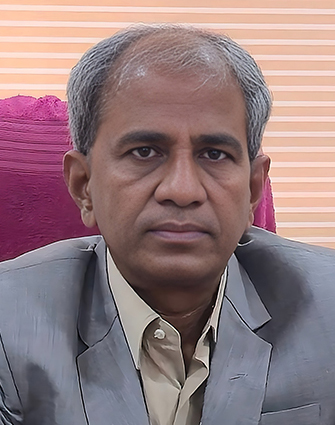 Y. Padmanabha Reddy, MPharm, PhD
India-Andhra Pradesh Chapter President
Professor and Principal, Raghavendra
Institute of Pharmaceutical Education and Research
Anantapur, Andhra Pradesh, India
ISPOR: How is the HEOR landscape evolving in your country or region, and what role has your chapter played in supporting this development?
Y. Padmanabha Reddy: The HEOR landscape in India—particularly in Andhra Pradesh—is undergoing rapid transformation driven by expanding health insurance coverage, digital health adoption, and increasing demand for evidence-based decision making within both public and private sectors. Policy makers, hospital networks, and payers are progressively seeking real-world evidence, insights into cost-effectiveness, and value-based frameworks to guide reimbursement policies, formulary decisions, and the adoption of new technologies.
Our ISPOR India—Andhra Pradesh Chapter has played a catalytic role in this evolution by building HEOR capacity across academia, clinical institutions, and emerging health tech ecosystems. We have conducted workshops on pharmacoeconomics, outcomes research, and health technology assessment; mentored students and early career researchers; and facilitated collaborations among academia, clinicians, and industry. Through these initiatives, we have strengthened regional awareness of HEOR methodologies and supported the integration of evidence-based approaches into local healthcare planning and policy discussions.
How is your chapter incorporating emerging approaches such as real-world evidence, digital health, or artificial intelligence into its activities and discussions?
Our chapter has strategically positioned itself at the intersection of HEOR, digital health, and data science, recognizing that modern evidence generation depends on high-quality, real-world data and advanced analytics. We operationalize this through:
- RWE-focused capacity building on study design, data quality, and electronic medical record-based analytics
- digital health and AI seminars covering predictive modeling, mobile patient-reported outcome measurement, and
AI-enabled decision support and - collaborative research across maternal-infant health, infectious diseases, and chronic disease outcomes
We also convene interdisciplinary innovation forums to examine how AI and digital technologies can strengthen HEOR, HTA, and value-based care.
In parallel, our chapter is developing applied analytical tools, including digital medication adherence monitoring algorithms for eclampsia, AI-based drug safety prediction models to support proactive pharmacovigilance, and predictive frameworks for antimicrobial resistance to inform stewardship programs. By embedding these innovations into training and mentoring, we are preparing future HEOR professionals to work effectively within data-intensive, technology-enabled healthcare systems.
We have strengthened regional awareness of health economics and outcomes research methodologies and supported the integration of evidence-based approaches into local healthcare planning and policy discussions.
What are your chapter’s priorities for the next few years, and how do you envision contributing to ISPOR’s global mission of advancing HEOR excellence?
By expanding HEOR capacity, promoting methodological excellence, and fostering evidence-based decision making, our chapter will contribute meaningfully to ISPOR’s global mission of advancing HEOR science and improving healthcare value worldwide. With our expanding portfolio of AI-enabled HEOR tools, we aim to establish our chapter as a central hub for innovation, interdisciplinary collaboration, and methodological leadership within India’s evolving healthcare ecosystem.
Over the next 3 years, our chapter aims to scale its impact through 3 strategic priorities that align with ISPOR’s global mission and the evolving needs of the Indian healthcare ecosystem:
- Strengthening HEOR capacity and workforce development. We plan to expand structured training programs, certification-oriented workshops, and mentorship for students, clinicians, and researchers. Our goal is to build a strong regional talent pipeline aligned with global HEOR standards.
- Advancing real-world evidence and digital health research. We will promote high-quality RWE studies, support digital health evaluation frameworks, and encourage interdisciplinary collaborations that apply AI and analytics to real-world datasets. Our ongoing development of medication adherence tools for eclampsia, drug safety prediction algorithms, and AMR predictive models will serve as flagship initiatives demonstrating how HEOR, AI, and digital health can converge to address critical public health challenges.
- Enhancing policy engagement and value-based healthcare adoption. We aim to support state-level health programs, insurance schemes, and hospital networks by providing HEOR insights that inform reimbursement, technology adoption, and patient-centered care. Our chapter will serve as a bridge between evidence and policy, especially in areas such as maternal health, infectious disease control, and antimicrobial stewardship.