Translating World-Class Research Into Innovations With Real Impact in Germany
Value & Outcomes Spotlight has partnered with PharmaBoardroom to share content that is relevant to the global HEOR community. This interview was originally published on the PharmaBoardroom website in September 2026. For more information and other stories like this, visit PharmaBoardroom.
Interview with Maike Sander, MD, Scientific Director & Chair of the Board, Max Delbrück Center, and Vice President, Helmholtz Health
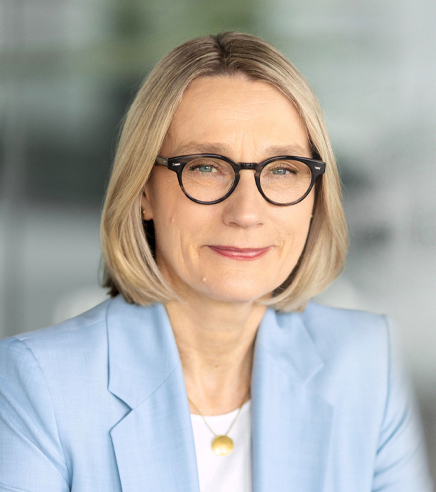
After almost 3 decades in the United States, Maike Sander, MD, returned to Germany with firsthand experience of an ecosystem where scientific discovery, entrepreneurship, investment, and industry intersect. Now leading the Max Delbrück Center, she is working to strengthen those connections in Germany while building on the distinct advantages of Europe’s research model. From cell therapy and AI-enabled discovery to venture building and the culture of scientific entrepreneurship, Sander sets out what it will take to turn world-class research into innovations with real impact.
“AI predictions still need to be experimentally validated. We are certainly not at a point where AI alone will give us the next therapy.”— Maike Sander
PharmaBoardroom: What has shaped your scientific career, and what motivated your return to Germany after almost 30 years in the United States?
Maike Sander: I trained as an MD in Germany and then spent almost 30 years pursuing my research career in the United States, particularly in California, where I joined the University of California system immediately after medical school. My focus has been stem cell biology, particularly in diabetes. Career-wise, I became director of the Pediatric Diabetes Research Center at the University of California San Diego, where I was also co-director of the Center on Diabetes within the Institute of Engineering in Medicine.
Within the West Coast ecosystem, I saw firsthand how the handshake between academia, fundamental research, investors, large pharmaceutical companies, and small biotech can turn discoveries into something that really matters to society. I witnessed this impact as my foundational research enabled a biotech startup to initiate clinical trials, a pipeline that was later acquired and advanced by a major pharmaceutical company.
Over those same 3 decades, I saw fundamental and discovery science in Germany become stronger, supported by substantial government investment, and watched its quality and breadth evolve considerably. What I also saw, however, was a critical gap in the translational pipeline connecting laboratory discoveries to commercial markets. That became a major motivation for returning to Europe. Having experienced an ecosystem in the United States where the different components come together very effectively, I felt I could bring some of that experience back and help shape the ecosystem in Germany and Europe.
PB: How does the Max Delbrück Center fit within Germany’s biomedical research ecosystem, and what sets its approach apart?
MS: The Max Delbrück Center is part of the Helmholtz Association, Germany’s largest scientific research organization. Being part of Helmholtz gives us access to an interdisciplinary scientific ecosystem of a scale that an individual institution could not achieve on its own. We collaboratively advance infrastructure and scientific expertise across universal health research domains, with an emphasis on AI, data science, and biomedical engineering.
I firmly believe that scientists conducting creative, discovery research should not be expected to become business entrepreneurs to see their work commercialized.
Our research is disease-agnostic, so rather than focusing on one particular disease, we pioneer technologies and approaches that can enable new ways to diagnose, prevent, and treat disease, and then work with clinical partners to identify where they can have the greatest impact. Cell therapy is a good example: CAR-T cell approaches developed at the Max Delbrück Center were initially directed towards cancer, but we are now seeing the potential of related approaches in autoimmune and other diseases.
PB: What is needed to translate more of Germany’s scientific excellence into medical innovation and patient impact?
MS: For us, it is really about enabling scientists to take those next steps by creating the right structures around them. We have reconceptualized what was previously our Technology Transfer Office and created an Innovation & Entrepreneurship Department with a much broader remit that goes beyond patenting to support business development, industry partnerships, venture building, and spin-offs around promising scientific discoveries. What we are trying to do is bring that expertise much closer to the labs and the science.
I firmly believe that scientists conducting creative, discovery research should not be expected to become business entrepreneurs to see their work commercialized. Our approach at the Max Delbrück Center is to build an umbrella of expertise around them, particularly in areas such as venture building and regulatory affairs. Investigators can then remain focused on what they do best, while having access to the capabilities needed to connect their discoveries with industry and move them toward the market.
When we look at why ecosystems such as Boston or the US West Coast have been so successful, however, the differences are not purely structural. Culture and individual attitudes towards risk emerge as important factors. At the Max Delbrück Center, we are bringing in people who have successfully built companies to share their experiences with our trainees, because it is difficult to envision a career path for yourself if you have never met someone who has taken it.
Alongside that cultural shift, Germany also needs to consider whether it wants to create a more venture-friendly environment, from its regulatory frameworks and the time it takes to move from an idea to a venture to taxation and the conditions for high-risk investment. Investors will always consider where and how they can generate a return, including the prospects for a product once it reaches the market. Germany remains relatively slow in this respect, and the overall conditions for high-risk investment are still less favorable than in some of the world’s leading innovation ecosystems. Building a stronger translational ecosystem will require both cultural and structural progress.
PB: What potential does cell therapy hold for type 1 diabetes, and how could artificial intelligence accelerate the development of new treatments?
MS: Refined insulin therapy regimens have made huge strides in improving both quality of life and life expectancy, while helping to prevent many long-term complications. Yet that only tells part of the story. For many people with type 1 diabetes, there is hardly a waking moment when they can stop thinking about the disease. They constantly have to consider when and what they eat, how they time it, and what that means for their insulin. Even with the technologies and apps that have tremendously improved diabetes management, the psychological burden remains enormous.
At the same time, we need to communicate the timelines for developing new therapies more clearly and avoid overpromising how quickly they can reach patients. Safety is paramount, particularly when treatments can carry serious or even life-threatening risks.
I think we will increasingly see teams working on data science-enabled predictions alongside scalable validation platforms that allow us to establish whether those predictions are mechanistically true.
Bringing a fundamentally new therapy from discovery to market can take decades, even within a well-functioning ecosystem. CAR T-cell therapy is one example, and cell therapy for type 1 diabetes is another. We are also getting close in Parkinson’s disease, where efforts began around the same time as those in diabetes and followed a remarkably similar path. The timelines have progressed largely in parallel, which suggests there may be limits to how much we can shorten the overall development process without compromising the validation needed to ensure safety.
Where I do expect us to gain time is on the discovery science side, particularly as we enter a new era of AI-enabled research. AI can help us predict new drug targets and, in the case of molecular interventions, identify where a compound might alter the properties of a protein, while automation and scalable screening capabilities can accelerate laboratory processes that previously relied on individual scientists working manually.
However, AI predictions still need to be experimentally validated. We are certainly not at a point where AI alone will give us the next therapy. I think we will increasingly see teams working on data science-enabled predictions alongside scalable validation platforms that allow us to establish whether those predictions are mechanistically true.
PB: Where would you like to see the Max Delbrück Center in the next 5 years, and what can Europe learn from the United States while building on its own strengths?
MS: If the end goal is to bring a new medicine to market, the Max Delbrück Center cannot achieve that alone. We need interconnected ecosystems in which institutions and different players work together, including through stronger partnerships with industry. For us, success is therefore about becoming even better at what we do best: producing innovative, validated discovery science that can then be taken forward by the next players in that ecosystem.
At the same time, we need to become better at thinking through what a discovery could ultimately enable, whether that is a new diagnostic, a new therapeutic, or perhaps a new way of preventing disease, and then carry out the early validation needed to establish that potential. An important part of this is creating patents that have real value, because discoveries are unlikely to reach the market without strong intellectual property. For me, an important measure of the Max Delbrück Center’s future success will therefore be our ability to combine scientific breakthroughs with validated, patentable inventions that can be taken forward by the next entity in the ecosystem.
Europe often looks to the United States as the exemplary innovation ecosystem, and there is certainly much we can learn from it. But Europe has important strengths of its own. Germany, for example, has a relatively coordinated approach to funding science and provides long-term support for discovery research. The US system is incredibly dynamic, which is one of its great strengths, but the short-term nature of much of its funding can hamper the longer-term thinking required to create innovation. For me, the opportunity is therefore not simply to replicate the US model, but to understand what works in each system and build on the strengths we already have in Europe.
Photo credit: Pablo Castanogla / Max Delbrück Center