ISPOR Chile National Ranking of Impactful HEOR Practices Expands Its Reach
Daniela Paredes-Fernández, MPH, ISPOR Chile Chapter President
Why a National Ranking?
Across the Chilean healthcare system, providers, patient organizations, startups, and clinical teams make decisions grounded in healthcare economics every day without exception, whether it’s measuring outcomes, navigating pharmaceutical budgets, or optimizing care pathways. Yet this work regularly takes place without receiving any kind of formal recognition. Today, Chile has no central body to coordinate health technology assessment at the national level, and structured health economics and outcomes research (HEOR) capacity remains concentrated in universities, widening the gap between academic production and frontline practice.
To close that gap, the ISPOR Chile Chapter developed its National Ranking of Impactful Practices in HEOR. By documenting and rewarding impactful HEOR practices across the health system, the initiative recognizes what has long gone unacknowledged. Launched in 2024, the program’s second edition in 2026 continues this mission with expanded reach and 2 new categories, reinforcing a culture of evidence-based healthcare management and bringing new stakeholders closer to the values and methods that define HEOR at the international level.
Highlights from the Second Edition
The 2025-2026 Ranking engaged more than 800 participants—a significant increase from its inaugural edition—distributed across 9 categories, including 2 new additions: Projects for Resolving Waiting Lists Driven by the Network (supported by Medtronic) and Vanguard Models of Care.
Submissions were evaluated through a double-blinded process and scored by a distinguished panel of national and international judges, including academics, researchers, and leaders from ISPOR’s Latin American chapters. The Health Innovation category attracted the highest number of applications, underscoring a growing community interest in disruptive and process-centered approaches to healthcare. Notably, a patient-led foundation earned second place in the General Ranking—affirming that patient-generated evidence is an increasingly legitimate driver of health policy in Chile.
What Impactful Practices Were Honored?
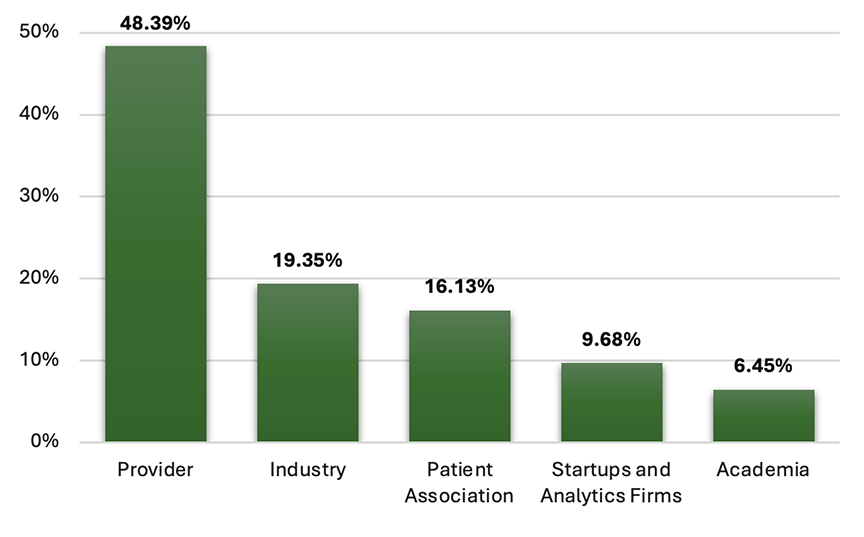
Across 31 award positions in 9 categories, provider organizations (public and private) represented the largest share of recognized stakeholders (48.4%), followed by industry (19.4%), patient associations (16.1%), startups (9.7%), and academia (6.5%).
Figure 1. 2025-2026 Awards Sorted by Type of Stakeholder
First-Place Winners by Category
— Diagnosis-Related Groups (DRGs)
Hospital San José de Melipilla was recognized for implementing same-day total knee arthroplasty under Chile’s DRG framework. By adopting a methodology from FONASA (Chile’s National Health Fund), the hospital identified a coding gap that classified ambulatory orthopedic procedures as ungroupable, and they established a reliquidation mechanism with FONASA. The hospital delivered this care pathway for 61 patients—reducing average hospital stays from 4 days to hours, enabling discharge from Day 1, and lowering infection risks.
— Health Technology Assessment
Roche Chile earned first place for a local cost-effectiveness analysis of risdiplam for spinal muscular atrophy (Types I, II, and III) in Chile’s public healthcare system. With approximately 130 patients currently relying on litigation as their only access pathway—reaching up to $48 billion in unplanned state spending in 2024—this analysis provides locally grounded evidence to structure a sustainable, equity-based coverage model.
— Health Innovation
SISTAM, developed by Gerópolis and the Universidad de Valparaíso, earned first place in this popular category as well as third place in the General Ranking. This co-designed primary care platform integrates electronic healthcare records, geographic information systems, and a patient reachability module across 26 family health centers in 6 municipalities, reaching approximately 600,000 people and reducing appointment no-show rates from 35% to 10%. (Learn more about SISTAM in this issue’s feature story.)
— Projects for Resolving Waiting Lists Driven by the Network
Hospital Santiago Oriente and Dr Luis Tisné Brousse were recognized for implementing a bariatric and metabolic surgery program in a public hospital specifically designed for the FONASA A Section patients, excluded from copayment mechanisms. The practice addresses an estimated 170,000 eligible patients currently without access, establishing surgical equity as a measurable health economics outcome within the public system.
— Management of Medicines and Medical Devices
Neuro Group XR Inc, in alliance with Clínica Alemana de Santiago and Universidad del Desarrollo, earned recognition for generating real-world evidence supporting immersive virtual reality (VR) for rehabilitation. Among 21 clinicians and 44 patients, the system achieved a mean usability score of 82.5% (USEQ), with 84% of patients reporting perceived added rehabilitative value—building the evidence base for institutional adoption of this cost-effective neurotechnology.
— Health Outcomes Evaluation
The same consortium (Neuro Group XR Inc., Clínica Alemana de Santiago, and Universidad del Desarrollo) along with Mutual de Seguridad CCHC and the University of Manchester, earned both the category prize and first place in the General Ranking. Their practice documented a 57% reduction in opioid expenditure in a severe burn patient and statistically significant functional improvements across all validated scales in a 12-patient acute stroke cohort treated with early immersive VR rehabilitation.
— Patient-Led Projects
Fundación Mujeres por un Lazo organized Chile’s first intersectoral forum on triple-negative breast cancer—a subtype affecting 600 to 800 women annually, with no coverage at the time for innovative therapies in the public sector and a 5-year survival rate (approximately 7 times worse than other subtypes). The forum convened 19 stakeholders from clinical, policy, and patient communities, producing 7 concrete proposals for systemic change, and earned second place in the General Ranking.
— Vanguard Models of Care
CESFAM Dr Salvador Allende Gossens of Huechuraba Municipality was recognized for implementing a community hockey school as a salutogenic prescription for children and adolescents with attention deficit/hyperactivity disorder, anxiety, and depression. After 1 year, 85% of participants reported feeling more emotionally secure, with an average 20% reduction in anxiety scores—evidence that sport-based prescribing is an effective mental health strategy at the primary care level.
— Other Health Impact Initiatives
The Banco Nacional de Tejidos de Chile, in alliance with FK Economics, was recognized for a quality-adjusted life years-based social and economic evaluation of Chile’s national tissue bank. By correcting a market failure that had made locally produced tissue inaccessible due to high costs and limited availability, the practice established the evidence base for a policy that ensures equitable access to tissue therapies across Chile’s public health system.
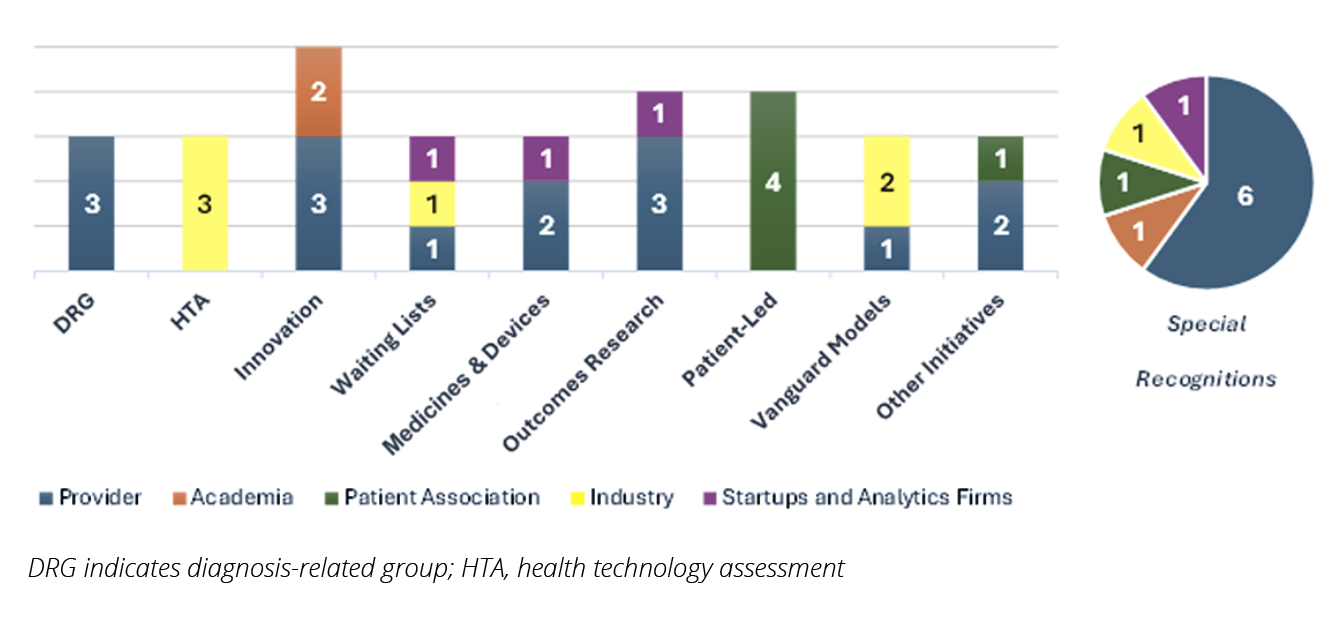
Figure 2. Classification of 2025-2026 Winning Stakeholders by Category
Advancing ISPOR’s Mission
The second edition of the ISPOR Chile National Ranking has deepened the Chapter’s engagement with a broadening stakeholder ecosystem: from primary care teams co-designing digital tools, to neurotechnology startups generating real-world evidence, to patient foundations driving intersectoral dialogue.
The inclusion of 2 new categories, growth in participation, and particularly, the presence of a patient association on the General Ranking podium signal that Chile’s HEOR community is maturing. Evidence is being generated at every level of the health system, and the National Ranking is making that work visible.